

A construction project can have a sound plan and still lose momentum when site decisions, communication and skilled trades aren’t aligned. Professional site management services connect strategy with on-site execution, helping teams identify avoidable delays and keep work moving towards project goals.
If you’re coordinating trade availability, logistics and changing project demands, small gaps can affect the whole build. Clear leadership and communication help keep people, planning and practical work connected. The aim isn’t simply to supervise a site. It’s to coordinate the work and resources needed to deliver the project.
This article explains what effective site management involves, where projects commonly lose momentum and how an end-to-end approach can connect business strategy with site execution. PK Services brings construction consulting, skilled trade supply and project management together across NSW and QLD, drawing on more than 15 years of industry experience.
Key Takeaways
- Professional site management services connect business priorities with practical site execution.
- A business and project review can reveal operational gaps before you set useful site performance measures.
- Comparing reactive supervision with proactive oversight can show where better coordination may prevent avoidable rework.
- Continuity from project inception to closeout can help teams retain context as work progresses.
- PK Services combines construction consulting, end-to-end project management and skilled trade supply across NSW and QLD.
What are Professional Site Management Services in 2026?
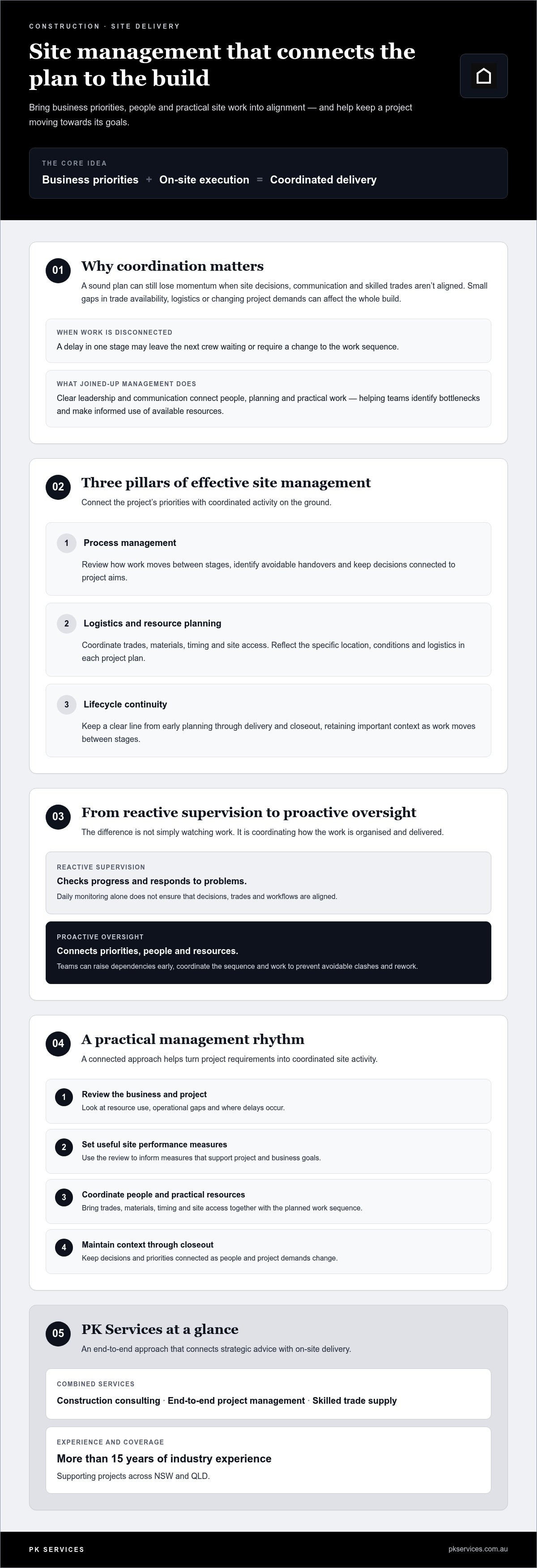
Professional site management services bring project leadership and on-site execution together. The work goes beyond checking progress or responding to problems. It connects project priorities with the people, processes and resources needed to deliver them.
This distinction matters on complex builds. Software can help organise information, and a supervisor can monitor daily activity, but neither alone ensures that decisions, trades and workflows are aligned. Effective management uses clear communication and practical coordination to identify bottlenecks, make informed use of available resources and keep site activity connected to business goals. The focus shifts from simply watching work to improving how it is organised and delivered.
Construction management (CM) covers core functions such as planning and budgeting, providing a useful foundation for understanding the discipline. Professional site management applies that joined-up thinking on the ground, where plans meet changing conditions and day-to-day decisions.
The Evolution of the Site Manager Role
The role has expanded from technical oversight to include broader project coordination. Trade knowledge remains important, as does understanding how site decisions affect programme, resources and business performance. A delay in one stage, for example, may leave the next crew waiting or require a change to the work sequence. Clear leadership helps teams raise dependencies early and respond with purpose.
Business process management belongs on the construction floor as well as in an office plan. Skilled trade integration is part of that work: trades need to be coordinated with the project sequence so people and tasks are managed together, not in isolation.
Core Components of Professional Oversight
- Process management: Review how work moves between stages, identify avoidable handovers and keep decisions connected to project aims.
- Logistics and resource planning: Coordinate trades, materials, timing and site access. Projects in NSW and QLD can have different locations, conditions and logistics, so plans should reflect the specific site.
- Lifecycle continuity: Maintain a clear line from early planning through delivery and closeout, helping retain important context as work moves between stages.
For construction businesses, site management is part of operational performance, not simply another layer of supervision. PK Services combines strategic construction consulting, end-to-end project management and skilled trade supply across NSW and QLD, drawing on more than 15 years of industry experience.
The Essential Pillars of Modern Site Management
Strong site management connects commercial priorities with decisions on the ground. Its key elements include strategic business advice, continuity across the project lifecycle, coordinated trade supply, and attention to applicable compliance and safety requirements. If one is overlooked, a gap can open between what the business plans and what the site can deliver.
Strategic Advice and Full-Cycle Management
Continuity matters, too. A connected approach from initial planning through closeout can help preserve context as decisions, people and priorities change. CMAA’s explanation of construction management as a professional service offers useful context for coordinated oversight. For a contractor, that oversight can help keep commercial objectives in view while work progresses on site.
Bridging the Labour Gap with Skilled Trades
Having trades available is only part of the challenge. Their work also needs to fit the project sequence, with clear expectations and timely communication. Coordination can help reduce avoidable clashes and frustration, supporting more productive working relationships. It may also contribute to contractor retention by creating a more organised site environment, although retention depends on broader conditions.
PK Services draws on 15 years of industry expertise to provide skilled trades alongside strategic oversight. When assessing trade support, consider relevant experience, reliability and how each contractor will fit the planned work. Explore practical considerations for skilled trades for construction sites.
Compliance, Safety and Operational Performance
Compliance planning needs to reflect the project’s location and timing. The National Construction Code 2025 was published on 1 May 2026, but adoption varies across jurisdictions. Queensland has delayed commencement until 1 May 2027, with NCC 2022 continuing to apply to building and plumbing work until then. For projects in NSW and QLD, confirm which requirements apply to the specific project rather than assuming the same timetable covers both.
Good processes also help teams identify unnecessary downtime, wasted effort and inefficient handovers. Review how resources are allocated and where work stalls, then use those findings to improve operations and support profitability. Better coordination is a practical way to raise standards without simply adding more oversight. Businesses looking to connect strategic advice with trade supply can learn about PK Services’ construction consulting and site management.
Strategic Oversight vs. Traditional Supervision: A Comparison
Traditional supervision often responds to issues as they arise: a trade is waiting, a delivery conflicts with site activity, or completed work needs correction. Strategic oversight looks for the conditions that could cause those problems. It considers the project sequence, trade availability, logistics and business priorities together, so decisions reflect the wider job.
This distinction is especially useful when several contractors and work stages need to align. A foreman may focus on the day’s tasks, while a management partner considers what those tasks depend on, what comes next and whether resources are available. The Construction Management Standards of Practice provide a professional reference point for the scope of construction management. On site, the practical value comes from connecting oversight with execution rather than treating them as separate concerns.
The ROI of Strategic Site Leadership
Strategic leadership can help teams identify and manage avoidable delays across a project lifecycle. For example, if an upcoming work stage depends on a trade crew or material delivery, identifying that dependency early gives the team a chance to adjust the sequence before people are left waiting. This doesn’t guarantee a shorter programme, but it can make delays easier to anticipate and manage.
Business consulting adds a commercial perspective by connecting site decisions with the firm’s operating priorities, including how time and resources are used. When trade supply is planned alongside site activity, teams can address a need with fewer gaps between identifying it and arranging the work. For more ideas on the commercial side, read this guide to improving construction business profitability NSW.
Risk Mitigation and Project Recovery
If a project in NSW or QLD is losing momentum, map the issues before making changes. Review work sequencing, trade availability, delivery timing, unresolved decisions and handovers. This can reveal warning signs, such as crews repeatedly waiting for access or work being scheduled before a prerequisite stage is ready. Addressing the cause may help prevent disruption from spreading through the programme.
People matter as much as logistics. Clear expectations and timely communication help keep contractors, site leaders and business decision-makers aligned when priorities shift. For industrial relations matters, seek appropriately qualified advice where needed. Site management can support coordination, but it shouldn’t be treated as a substitute for specialist guidance.
Professional site management services take a whole-project view, from initial planning through closeout. PK Services combines construction consulting, skilled trade supply and end-to-end project management across NSW and QLD, drawing on 15 years of industry experience. The focus is practical: identify issues earlier, connect decisions to site activity and maintain continuity as work progresses.
How to Implement High-Performance Site Management
Better site performance starts with a clear picture of how the business and project operate. Use these steps to connect strategy, people and site activity, then review what is working as the build progresses.
- Check the business and project. Review current processes, resource use, recurring delays and handovers. Identify where plans and site execution are out of step before deciding what to change.
- Set practical performance measures. Choose KPIs that reflect project priorities, such as progress against planned stages, unresolved issues or time lost waiting for resources. Make each measure clear, trackable and useful for decisions.
- Coordinate skilled trades. Match contractor availability and experience to the work sequence. Set expectations early and ensure each trade understands relevant dependencies and who to contact if plans change.
- Connect office and site communication. Establish clear channels for decisions, updates and issue escalation. Record key actions so business leaders, site teams and contractors are working from consistent information.
- Review and refine. Check performance throughout the project, not just at closeout. Use what the team learns to adjust workflows, logistics and resource allocation for upcoming stages.
Set a Clear Standard for Site Execution
Good site protocols turn expectations into everyday practice. Agree on how tasks are handed over, how changes are communicated, and how access, deliveries and work areas are organised. In high-density areas such as Sydney, consider site constraints and delivery timing when sequencing work. Set standards that meet applicable requirements and suit the specific project.
Check Local Requirements and Project Timing
Regulatory planning needs to reflect the project’s location and timing. The National Construction Code 2025 was published on 1 May 2026, but adoption differs across jurisdictions. Queensland has delayed commencement until 1 May 2027, with NCC 2022 continuing to apply to building and plumbing work there until then. Confirm which code and requirements apply to the project, and check current guidance from the relevant bodies, including QBCC and NSW Fair Trading. Professional oversight can help keep compliance considerations visible, but it doesn’t replace project-specific advice or guarantee that penalties will be avoided.
For a broader view of how business strategy can connect with site delivery, read about construction business consulting Australia. PK Services brings construction consulting, skilled trade supply and end-to-end project management together across NSW and QLD. To discuss an integrated approach for your project, explore end-to-end construction management.
PK Services: Redefining Site Management in QLD and NSW
PK Services provides construction consulting and end-to-end project management across NSW and QLD. Its approach brings strategic advice together with practical trade supply. Drawing on more than 15 years of industry experience, PK Services connects an understanding of site realities with a broader view of how project decisions affect the business.
This integrated perspective can suit firms looking for more than a plan on paper or supervision limited to daily tasks. Professional site management services should connect project direction with the work being delivered and keep the full lifecycle in view. PK Services manages the process from start to finish, helping maintain continuity as a project moves from its initial stages through delivery and closeout.
A Tailored Approach to Construction Excellence
Every construction business has its own priorities, capacity and project demands. Start by understanding those differences, then consider how consulting, project management and skilled trade supply could support the work. The approach should fit the project rather than force every business into the same template.
For firms seeking an alternative to a rigid, standardised model, a direct advisory relationship can help keep business goals and site decisions connected. A suitable partner should explain their role, the work they manage and how communication will flow. Agreeing on these points helps set shared expectations and gives decision-makers a consistent point of contact as the project develops.
Bridging the Gap Between Strategy and Site
PK Services’ “Redefining Excellence” mission is grounded in integration: bringing business consulting, skilled trades and project management together rather than treating them as separate needs. For construction firms, that means considering both what the project requires and how strategy and on-site execution can support each other throughout the work.
As the 2026 construction landscape continues to evolve, firms can review whether their current ways of working still suit their projects and priorities. Start with an honest discussion about what’s working, where coordination could improve and what support would make a practical difference. The goal is a more connected path from business priorities to site delivery, without adding complexity for its own sake.
Planning a project in NSW or QLD? Talk to PK Services about your project today to discuss construction consulting, skilled trade supply and end-to-end management.
Set a Stronger Standard for Your Next Project
Construction excellence depends on more than keeping daily tasks moving. It takes clear strategic direction, coordinated trades and consistent oversight from early planning through closeout. The right approach can connect business priorities with site decisions, identify process gaps and support better use of project resources.
That’s the value of professional site management services: bringing planning and practical execution together rather than treating them as separate responsibilities. For construction businesses in NSW and QLD, local project demands call for adaptable planning and dependable coordination.
PK Services brings more than 15 years of construction industry experience to business consulting, skilled trade supply and end-to-end project management across NSW and QLD. If your current processes aren’t supporting the outcomes you want, consider how strategy and site delivery could work together more effectively.
Redefine your site standards with PK Services and start a conversation about a more connected approach to your next project.
Frequently Asked Questions
What is the difference between a site manager and a project manager?
A site manager typically focuses on coordinating daily work on site, while a project manager commonly oversees broader planning, resources and delivery. Exact responsibilities depend on the project and agreed roles. Strong site management connects the two, keeping day-to-day decisions, trade coordination and site logistics aligned with the project’s wider goals. Clarify responsibilities early so important tasks don’t fall between the site and project teams.
How do professional site management services improve construction profitability?
Professional site management services can support profitability by helping teams identify workflow issues, reduce avoidable downtime and coordinate trades with the planned sequence. For example, flagging a delayed prerequisite task early may let a business adjust the next stage before a crew is left waiting. Results depend on the project and how changes are managed, so track relevant measures such as progress, rework and resource use rather than assuming savings.
Can professional site management help with the current labour shortage in NSW and QLD?
Professional site management can help construction businesses make better use of available trades, but it can’t remove the wider labour shortage. Coordinating contractors around the project sequence, communicating expectations and identifying upcoming resource needs can reduce clashes and unproductive gaps. PK Services provides skilled trades and contractor services alongside strategic oversight across NSW and QLD. Confirm which trade types, experience and availability suit your project before engaging support.
What should I look for when choosing a construction site management partner?
Look for relevant construction experience, a clear scope of work and an approach that connects business priorities with site delivery. Ask how the partner coordinates contractors, communicates changes, maintains continuity between project stages and reports progress. For work in NSW or Queensland, discuss how they account for the project’s location and applicable requirements. Confirm who is responsible for decisions, what services are included and how trade supply fits the arrangement.
Does PK Services provide both management and the actual tradespeople?
Yes. PK Services provides construction consulting and project management, as well as skilled trades and contractor services. This brings strategic oversight and trade supply together rather than treating them as unrelated needs. The business draws on more than 15 years of industry experience and manages the process from start to finish. Discuss the project scope and required trade support directly, as specific trade types should be confirmed for your site.
How does strategic site management assist with project recovery for failing builds?
Strategic site management can help bring a struggling project back into focus by reviewing work sequencing, contractor coordination, logistics and unresolved decisions. The team can identify where progress is stalling, clarify priorities and organise practical next steps with the relevant parties. Recovery depends on the project’s circumstances and the authority available to the management partner. For complex contractual, financial or technical issues, involve the appropriate specialist advisers.
What are the specific regulatory standards for site management in Queensland (QBCC)?
There isn’t one universal QBCC standard that covers every site management task. Requirements depend on the work, project and people involved, so check current Queensland Building and Construction Commission guidance and obtain project-specific advice where needed. Queensland’s NCC transition also matters: NCC 2025 commencement has been delayed until 1 May 2027, with NCC 2022 continuing to apply to building and plumbing work in Queensland until then.
Why is full-cycle management better than hiring separate consultants for each stage?
Full-cycle management can preserve project context from early planning through delivery and closeout. With separate consultants, responsibilities and information may need to be handed over between stages, so clarify how those transitions will be managed. An end-to-end partner can keep strategic advice, site coordination and trade supply connected under an agreed scope. Separate specialists may still be appropriate when a project needs expertise beyond the management partner’s role.


