

A project can be ready to build and still lose momentum when materials are ordered too late or do not meet requirements. A materials procurement strategy for construction in NSW sets out what to buy, when to buy it and how to assess suppliers, aligning purchasing with project needs. Construction procurement is broader: it covers securing the materials, services and contractors needed to deliver the work.
Procurement is more than finding a supplier and placing an order. Effective planning connects purchasing decisions with design approvals, delivery timing, quality checks and compliance requirements.
This guide explains how construction materials procurement works, what to include in a purchasing strategy and how NSW requirements can shape decisions. It shows how approvals, supplier choices and delivery schedules fit together, helping you close the gaps between the project brief and work on site.
Key Takeaways
- Align material approvals and quality checks with project specifications before purchasing, so requirements are clear when materials arrive on site.
- Plan orders around supplier lead times and delivery schedules, and consider alternative suppliers to reduce exposure to supply delays.
- Choose a procurement approach that reflects the project’s complexity, risk, and responsibility for supplying materials.
- For NSW government projects, understand how agency requirements and tender processes shape supplier assessment and purchasing decisions.
- Use business consulting, trades and contractor services, or end-to-end process management when project procurement needs broader operational support.
Material approvals, quality, and compliance
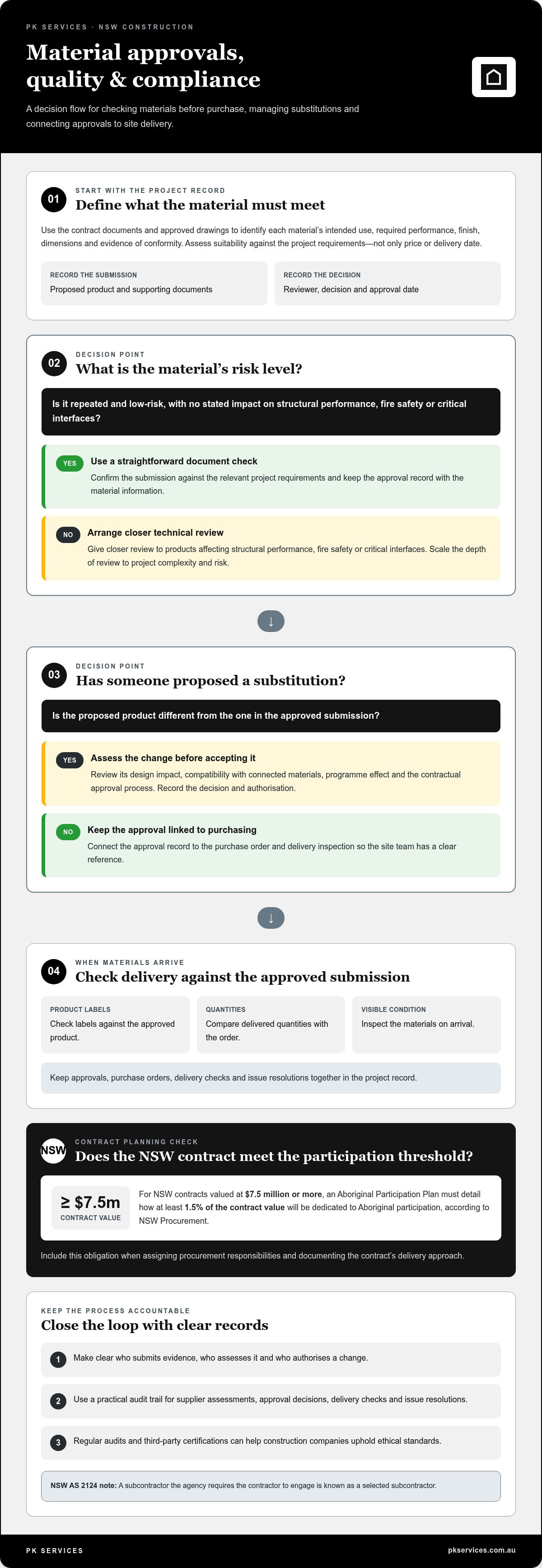
Material approval connects design intent with what arrives on site. Set clear requirements before ordering so the team can assess whether each product suits its intended use, project specifications and construction sequence.
Start with the contract documents and approved drawings. For each material, identify the required performance, finish, dimensions and evidence of conformity. For example, assess specified structural steel against the project’s structural requirements, not just its price or delivery date. Record the proposed product, supporting documents, reviewer, decision and approval date.
Link approval records to purchase orders and delivery inspections. This gives the site team a clear reference for checking product labels, quantities and visible condition against the approved submission. If someone proposes a substitution, assess its design impact, compatibility with connected materials, programme effect and contractual approval process before accepting it. A change after purchase can affect installation and responsibility for any resulting mismatch.
Project complexity and risk shape the depth of review. Repeated, low-risk materials may need a straightforward document check, while products affecting structural performance, fire safety or critical interfaces need closer technical review. Contracts should make responsibility clear: who submits evidence, who assesses it, and who authorises a change. In NSW AS 2124 contracts, a subcontractor the agency requires the contractor to engage is known as a selected subcontractor.
Compliance also includes ethical procurement. Regular audits and third-party certifications can help construction companies uphold ethical standards. Keep a practical audit trail of supplier assessments, approval decisions, delivery checks and issue resolutions. These records help teams identify gaps, investigate concerns and explain purchasing decisions.
NSW participation requirements can also affect contract planning. For NSW contracts valued at $7.5 million or more, an Aboriginal Participation Plan must detail how at least 1.5% of the contract value will be dedicated to Aboriginal participation, according to NSW Procurement. Include this obligation when establishing procurement responsibilities and documenting the contract’s delivery approach.
- Match each material submission to the relevant drawing, specification and intended use.
- Keep approvals, purchase orders and delivery checks connected in the project record.
- Route substitutions through a documented assessment before accepting a change.
- Scale review to project complexity, risk and the material’s role in the works.
Clear approval controls help teams make decisions before materials reach site. They also provide a stronger basis for managing quality, ethical expectations and responsibility if a supply issue arises.
What is Materials Procurement?
A materials procurement strategy for construction in NSW links purchasing decisions to project requirements and delivery timing. It sets out how materials are planned, sourced, ordered and managed through to arrival on site.
Planning the procurement lifecycle
The procurement lifecycle takes materials from identifying project needs through sourcing, ordering, delivery and performance review. Mapping each stage connects purchasing with the construction programme. For example, assign a decision-maker to each work package, record when specifications are needed and track when orders must be placed.
Keep assumptions and design changes visible in the procurement record. A revised finish or dimension can change the product or quantity required. Link each purchase decision to current project information to avoid ordering from superseded drawings and make responsibilities clear.
Ordering and managing supplier lead times
Lead-time management accounts for the period between placing an order and receiving materials ready for use. Confirm supplier lead times before setting purchase dates, then issue purchase orders with clear item descriptions, quantities and delivery arrangements. Identify long lead-time items early and coordinate orders with design decisions and the construction sequence.
Keep order changes, delivery dates and supplier updates together. If a delivery date moves, identify dependent activities and adjust the sequence where needed. This helps teams anticipate delays and avoid relying on outdated supply information when planning site work.
Supplier performance and risk management
Supplier performance management tracks whether orders meet agreed expectations for quality, quantity and timing. Review delivery records, defects and communication, then use those findings to plan later purchases. Repeated short deliveries, for example, may call for closer order tracking or a review of the supply arrangement.
Analyse lead times early and consider diversifying suppliers where practical. Any alternative source must meet project specifications and have suitable supply capacity. This can reduce reliance on one supplier, while keeping changes aligned with approvals and project needs.
Planning and scheduling deliveries
Plan NSW material deliveries by confirming requirements and site need dates, checking lead times, issuing purchase orders, and agreeing on delivery dates and site access. Match each delivery to available storage, handling equipment and the work sequence. For large steel quantities, deliveries scheduled across multiple months can support site handling and avoid disrupting activities.
Taxes, freight charges and contract terms affect total procurement cost. Review how the contract allocates tax, transport, unloading, delivery points, price changes and responsibility for damaged or delayed goods. These terms determine how costs and risks are divided between the parties.
Vendor-managed inventory is an arrangement where a supplier monitors agreed stock information and coordinates replenishment. It can suit regularly used materials when consumption is trackable and delivery arrangements are clear. Define expectations for stock visibility, replenishment approval and inventory responsibility. In an NSW construction materials procurement strategy, these details help align ongoing supply with actual site demand.
What is Construction Procurement?
Construction procurement coordinates the people, materials and services needed to deliver a project. It connects commercial decisions with supply continuity, tender requirements and supplier conduct.
Supply disruption and supplier diversification
Supply-chain disruption occurs when materials or services cannot reach a project as planned. Relying on a single source can expose the programme to changes in production, transport or availability. Diversifying suppliers can reduce reliance on one supply route, provided alternatives meet project specifications and can deliver when required.
Map critical materials against their sources, lead times and project dependencies. Then identify where an alternative supplier or product could support continuity. This integrated view helps teams monitor emerging constraints and consider options such as suitable prefabricated components, without treating substitution as automatically approved.
Price volatility and supply-chain disruption
Price volatility means material prices can change between estimating, ordering and delivery. In 2021, steel prices surged by 50% amid supply-chain disruptions, logistical challenges and increased demand. That example shows why procurement plans need to account for market movement alongside delivery risk.
Track quotations, validity periods, order dates and contract terms for price adjustments. If a supplier revises a quote, assess the effect on the project budget, timing and specified product before changing the order. Deciding early can reduce exposure to last-minute purchasing, while clear records explain how changes were managed.
Tender readiness starts with a clear scope, realistic supply assumptions and organised supplier information. For NSW government work, businesses must register on the buy.nsw Supplier Hub if their total engagement exceeds $150,000. Keeping business details and tender documents organised supports a smoother response when opportunities arise.
Supplier diversification means more than adding names to a list. Compare capacity, material suitability, delivery arrangements and the supplier’s ability to provide required records. A secondary source is useful only if it can meet project needs and its role is understood before disruption occurs.
Supplier conduct matters too. Set expectations for ethical behaviour and responsible sourcing, then include proportionate checks in supplier assessment and contract management. For example, request information about supply-chain practices, record concerns and define how corrective actions will be followed up. Regular audits and third-party certifications can help construction companies uphold ethical standards.
These checks can help address modern slavery risks, but a supplier declaration alone does not prove complete oversight. Consider where materials originate, how suppliers manage their own supply chains and what evidence supports their claims. Clear records make it easier to monitor issues and respond consistently.
Construction procurement works best as an integrated commercial process. Tender readiness, supplier choice, price review and conduct checks all affect supply reliability. Bringing them together helps teams anticipate disruption and make purchasing decisions with a clearer view of project risk.
Construction procurement strategy and purchasing
NSW builders can compare local suppliers, wholesalers and direct purchasing by assessing the full offer: specification fit, availability, delivery, freight, payment terms and responsibility for handling. For smaller projects, comparing three supplier quotes and placing an order can provide a straightforward basis for choosing.
A procurement strategy links purchasing activities to project scope, risk and contract arrangements. Preparing it early clarifies who supplies each item, when purchasing decisions are needed and how materials will reach site.
First, identify what the principal will supply and what the contractor must source. NSW construction procurement planning should account for principal-supplied materials, such as furniture, because they can affect the procurement method. Record the division of responsibility alongside the programme. Delays to materials or information required from the principal can put the project at risk.
For a smaller job, compare three quotes against the same specification and delivery requirements. A local supplier may suit smaller, time-sensitive orders; a wholesaler may suit consolidated purchasing; direct purchasing may work for a defined item with clear delivery arrangements. These are comparison points, not automatic advantages. Assess the complete offer, including freight, unloading, payment timing, product compliance and how variations are handled.
For NSW capital works projects valued at A$1 million or more, or with high associated risk, the NSW Government Procurement Policy Framework sets requirements for agencies that are not accredited. For capital works projects worth more than A$1 million, unaccredited agencies are required to use standard forms to engage private-sector service providers and contractors. Procurement method and contract form therefore need to fit the project’s value and risk profile.
Contract terms shape everyday purchasing decisions. Before orders are placed, clarify specifications, quantities, delivery points, inspection responsibilities, ownership and the process for substitutions. These details help match purchasing records with contract obligations. Payment provisions matter too: construction works in Australia commonly operate on a 30-day payment cycle, although exceptions exist for specialised items such as concrete or steel.
Long lead-time items may need to be ordered well before construction begins, while large steel quantities can be scheduled across multiple months. Early stakeholder engagement helps manage design changes and supply-chain issues. To prepare a procurement plan, map each major purchase to the required decision, responsible party and site activity, then update the plan when scope or delivery information changes.
For contracts valued over A$3 million, the procurement framework requires a 10% non-price evaluation criterion for SME participation. This makes evaluation broader than price alone. Include relevant non-price criteria in tender assessments, document how they are applied and connect the selected supplier to the project’s delivery needs.
A clear strategy brings purchasing, contract responsibilities and site activities together. It gives teams a practical basis for comparing offers and choosing an approach suited to the work.
How do NSW government construction projects procure materials and assess suppliers?
NSW government construction procurement follows agency requirements, project risk and the value of the work. Materials are considered within the broader tender, contract and delivery approach, not as isolated purchases.
First, the agency identifies the project scope, material requirements and procurement responsibilities. It then selects a procurement method and prepares tender documents explaining the work, requirements and assessment approach. Clear material specifications help suppliers respond on comparable terms and help the agency assess whether proposed products suit the project’s design and delivery needs.
Agency accreditation affects the process. Unaccredited NSW agencies undertaking construction projects valued at more than A$1 million or of high risk must use the Department of Finance, Innovation and Services system to select tenderers. For NSW capital works projects valued at A$1 million or more, or with high associated risk, the NSW Government Procurement Policy Framework sets requirements for agencies that are not accredited.
Supplier assessment should link tender responses to project requirements. An agency can assess whether a supplier addresses the specification, demonstrates delivery capacity and provides relevant supporting information. It can also compare delivery arrangements, risks and commercial terms. A consistent assessment record shows how the preferred tender meets stated criteria, rather than relying on price alone.
Thresholds also shape procurement obligations. Under the NSW Enforceable Procurement Provisions, construction contracts valued at A$9.584 million or more are covered by the stated threshold. For covered procurements, agencies should apply the relevant provisions to the tender process and keep decisions aligned with the applicable framework.
After selection, the contract turns tender commitments into delivery responsibilities. It should set out material descriptions, quantities, delivery points, inspection processes and how changes will be handled. For example, assess a structural component delivery schedule against site access, storage capacity and construction sequencing. Clear allocation of these tasks helps prevent gaps between supplier commitments and site operations.
During delivery, project teams can compare orders and received materials with contract requirements. They can record discrepancies, communicate them through the agreed process and track actions to resolution. This creates a traceable link between tender assessment, purchase decisions and actual supply. It also helps agencies identify recurring supplier performance issues for future procurement planning.
For contractors preparing for government tenders, organise project records around the stated criteria, material requirements and delivery approach. A focused review of these elements can clarify responsibilities and strengthen procurement planning. Discuss your construction procurement planning.
PK Services: Business Consulting
PK Services provides Business Consulting to construction businesses that need procurement decisions to align with wider project operations. This support can help teams clarify responsibilities, connect purchasing plans with site activities and address gaps affecting delivery.
When project delivery also requires skilled trades or contractors, PK Services provides Trades & contractor services. For businesses seeking coordinated support across project activities, PK Services can manage the entire process from start to finish. The right fit depends on what your team needs covered.
Discuss your procurement or project coordination needs with PK Services. Visit pkservices.com.au to start a conversation.
Set your next project up for stronger procurement
A materials procurement strategy for construction in NSW is most useful when it guides everyday project decisions, rather than sitting untouched after planning. As project needs change, keep purchasing responsibilities connected to site priorities and the information teams rely on.
If procurement planning is competing with other operational demands, PK Services supports construction businesses through Business Consulting. Its Trades & contractor services and end-to-end project management can also support broader project delivery needs.
Choose a next step that fits your project: clarify a procurement challenge, review how purchasing supports delivery, or discuss the operational support your team needs. A focused conversation with PK Services can help identify where to begin and what to prioritise.
Contact PK Services to discuss procurement and take a considered next step for your project.
Frequently Asked Questions
Who is Responsible for Procurement?
Responsibility depends on the contract and the project’s purchasing arrangements. The principal may procure specified items directly, while a head contractor may arrange materials assigned to its scope. A project procurement lead can coordinate requests, approvals, orders and records across the team. For example, a responsibility schedule can identify who prepares each material request, authorises the purchase, receives deliveries and resolves discrepancies.
What is a materials procurement strategy for construction projects in NSW?
A materials procurement strategy sets out how the project will source, manage and coordinate required materials with construction activities. A useful strategy translates the design into a procurement register, linking each item to its specification, decision-maker and required-on-site date. For a fit-out, for example, the register can distinguish client-selected finishes from contractor-supplied fixings, avoiding confusion during ordering and installation.
What NSW construction procurement rules and standards apply to building materials?
Applicable requirements depend on the project, contract, building work and procurement entity. The National Construction Code (NCC), relevant Australian Standards, approved project specifications and contract conditions can all shape material selection and evidence. Public projects may also have agency procurement requirements. Before finalising the tender or purchase order, prepare a compliance matrix linking each material to its required performance, supporting documentation and approval responsibility.
How to estimate material quantities and costs for a construction project in NSW?
Start with current drawings and specifications, then complete a measured take-off by trade or work package. Separate net installed quantities from allowances for cutting, breakage or design development, and record the basis for each allowance. Build the estimate from supplier quotations, including freight, unloading, storage, handling and applicable taxes. Reconcile the take-off against revisions before ordering, so changed dimensions or finishes do not leave the estimate based on superseded plans.
How can construction projects in NSW reduce material costs, waste and price escalation risks?
Reduce waste by coordinating dimensions across design, ordering and installation. For example, align sheet sizes or standard component lengths with the layout to limit offcuts. Compare equivalent compliant options, not just headline quotations, and assess freight, handling and expected wastage together. Track quote expiry dates and document agreed price-adjustment terms. Separating confirmed orders from forecast quantities also helps teams manage changes without overcommitting to materials they may not use.
What are the risks of material shortages, delays and supplier failure in NSW construction?
A shortage can interrupt the work sequence, leave trades waiting and force rushed substitutions. Supplier failure can also create uncertainty about outstanding orders, deposits, warranties and replacement stock. Map the activities that depend on each critical item, then record practical alternatives and the decisions needed to use them. If a delivery slips, assess the effect on connected trades, storage and installation dates before resequencing site work.
How do Australian Standards, NCC requirements and sustainability criteria affect material selection in NSW?
The NCC sets building performance requirements, while relevant Australian Standards and project specifications can inform how products demonstrate suitability. Sustainability criteria may add requirements for recycled content, durability, responsible sourcing or end-of-life handling. For example, a finish selected for a high-use area should meet project performance needs as well as environmental criteria. Record the evidence supporting each selection, including any declared product attributes required by the project.
What procurement strategies help NSW construction projects manage long-lead and imported materials?
Identify long-lead and imported items during design development, then link their approval, manufacture and transport milestones to the construction programme. Confirm specifications early, allow time for documentation and plan receiving arrangements before dispatch. For a specialist façade component, coordinate sample approval with production release and installation sequencing. Keep a compatible alternative under review where design requirements allow, and do not rely on an unapproved substitution to recover lost time.


