

A workable project budget starts with a clear view of expected costs, commitments and timing. Business consulting for builders in NSW can help organise these figures, track spending against the plan and spot cost or schedule pressures early. The aim is practical: understand the project’s current position, what is changing and which decisions need attention.
Budget control can feel like a moving target when timelines shift and project demands compete. A structured approach makes the numbers easier to follow and supports more confident decisions.
This article explains how builder-focused consulting can support budgeting, cost control and project time management across NSW. It also covers what to consider when choosing a consultant, so you can match the expertise to the work ahead.
Key Takeaways
- Map project costs, commitments and key dates early to create a clearer baseline for decisions.
- Track schedule changes alongside budget impacts so emerging pressure is easier to spot.
- Match a consultant’s experience and recommendations to the project’s specific needs and stage.
- Use business consulting and contractor support when gaps in planning or delivery are affecting project control.
Service coverage in Sydney, Wollongong and NSW
For builders in Sydney, Wollongong and across NSW, support can cover project planning, cost forecasting, workflow reviews and contractor coordination. The right scope depends on the project’s location, size and technical demands. Business consulting for builders in NSW can also review business processes, while building consultants focus on construction quality, defects or project documentation.
Structural and civil engineers address different technical needs. Structural engineers assess how a building’s frame carries loads; civil engineers work on elements such as site grading, drainage and infrastructure. A building consultant may inspect construction, document defects or review work against project requirements. Owners and contractors benefit from clear responsibilities, especially when engineering advice, site decisions and commercial planning overlap.
What business consulting services are available for builders in NSW? Common areas include budget planning, cost control, project scheduling, operational reviews and contractor coordination. The work can target a specific pressure, such as changing labour needs or delays affecting several trades.
What NSW grants or advisory programs support construction businesses? The NSW Consultants in Construction scheme is a procurement pathway for NSW Government agencies, not a cash grant for builders. It covers procurements below A$9 million excluding GST. Registered consultants are prequalified for engagements up to A$250,000 excluding GST; certified consultants cover engagements above A$250,000 and below A$9 million excluding GST. Agencies are recommended to seek at least one quote for procurements up to A$50,000 excluding GST, and at least 3 quotes for procurements of A$50,000 and above.
What insurance, WHS and regulatory risks should NSW building businesses address? Review insurance scope, site safety controls, subcontractor responsibilities, incident processes and contract obligations together. For example, a change in site conditions can affect work sequencing, safety controls and the allocation of contract risks. A structured review helps identify these connections before they disrupt delivery.
Project time management and cost projections
A reliable programme links each task to its prerequisites, labour needs and expected duration. Start with the project scope, then sequence approvals, procurement, site work, inspections and handover. For example, a delayed material delivery can affect installation, follow-on trades and the completion forecast. Recording these dependencies makes schedule changes easier to assess.
Cost projections should follow the same sequence. Allocate expected spending to work packages, then compare commitments and actual costs at each stage. Separate approved scope from possible changes, and record how a variation could affect labour, materials and timing. This gives project managers a clearer basis for updating forecasts than relying on a single headline figure.
A project manager coordinates scope, programme, communication and decisions across a construction project. A clerk of works focuses on observing site progress and workmanship against project documents. Their responsibilities differ, but clear reporting links site observations to decisions about sequencing, quality and compliance. For instance, a recorded defect can prompt remedial work before later trades cover the affected area.
Remedial work needs its own management plan. First, document the defect and define the required work. Then coordinate access, contractor responsibilities, materials, inspection points and effects on other activities. Keep instructions and evidence of completed work together. This creates a traceable record for reviewing progress and updating the forecast.
How can NSW builders manage contracts, variations and payment disputes? Maintain a current register of contract instructions, variation details, supporting records and claim responses. Under the Building & Construction Industry Security of Payment Act, payment claims and responses require careful administration; Scott Schedules can set out building claim particulars, including an alternative remediation or completion cost.
Useful consulting connects these records to day-to-day project management. A focused review can identify schedule dependencies, forecast pressure points and gaps in project knowledge, helping the team make timely decisions while accounting for relevant regulations.
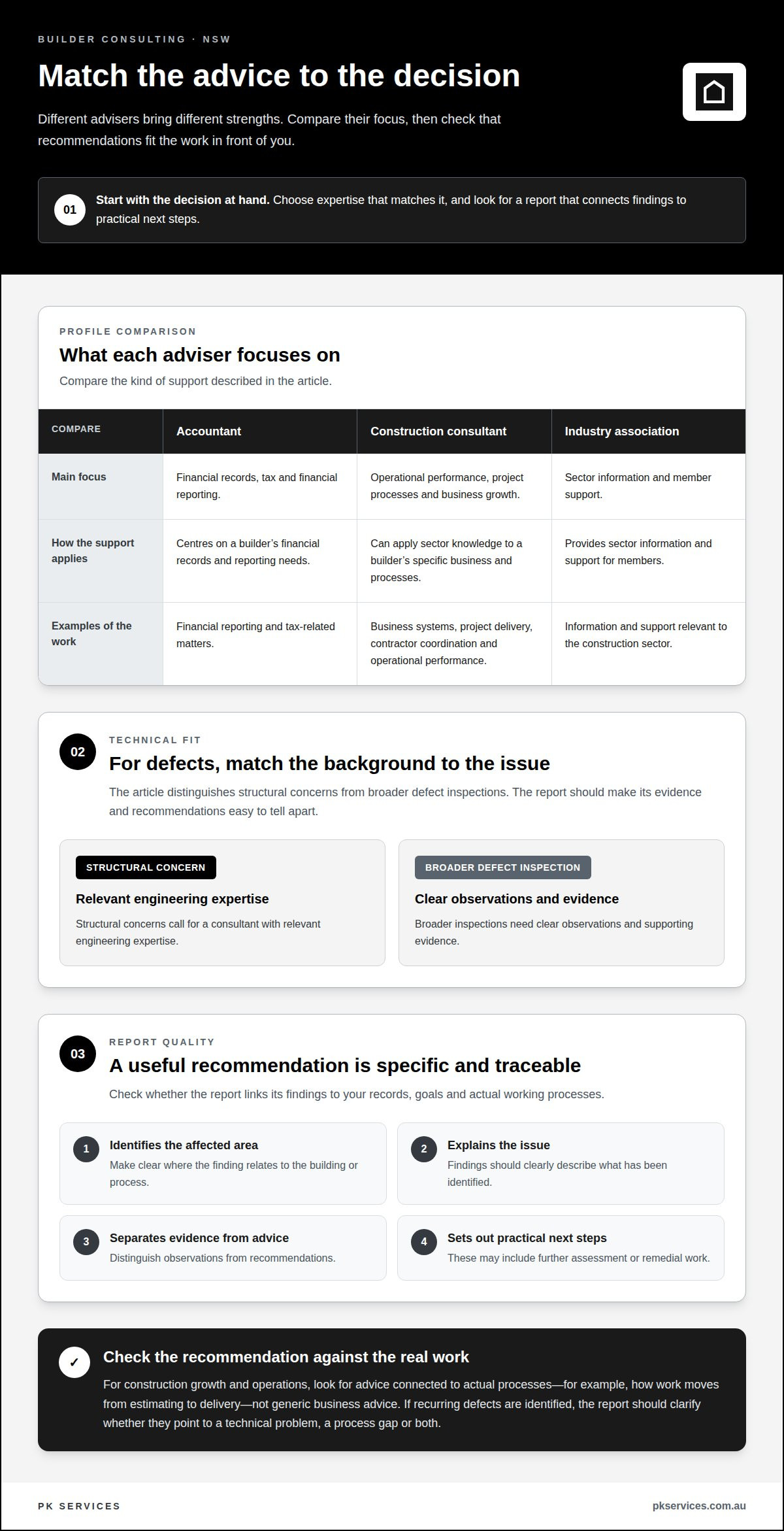
Comparing consultant profiles and recommendations
Choose expertise that matches the decision at hand. A useful report connects its findings to practical next steps.
How do construction business consultants compare with accountants and industry associations? Accountants focus on financial records, tax and financial reporting; construction consultants examine operational performance, project processes and business growth. Industry associations provide sector information and member support, while a consultant can apply that knowledge to a builder’s specific business.
For building defects, match the consultant’s technical background to the issue. Structural concerns call for relevant engineering expertise, while broader defect inspections need clear observations and supporting evidence. A strong report identifies the affected area, explains the issue and distinguishes observations from recommendations. It should also set out practical next steps, such as further assessment or remedial work, without blurring technical findings and commercial advice.
Construction growth and operations specialists
Which NSW consultants specialise in construction business growth and operations? Look for consultants focused on construction firms, including business systems, project delivery, contractor coordination and operational performance. Recommendations should relate to your actual processes, such as how work moves from estimating to delivery, rather than rely on generic business advice.
Check how recommendations connect to your records and goals. If a report identifies recurring defects, for example, it should clarify whether the issue points to a technical problem, a process gap or both. For building inspections, findings are assessed against the National Construction Code, relevant Australian Standards and manufacturers’ installation guidelines.
Choosing a business consultant
What steps should a NSW builder take to choose a business consultant? First, define the decision you need help with, such as improving operations or understanding a report. Then compare relevant construction experience, proposed scope, deliverables and how recommendations will be presented. Ask for a clear explanation of the method, information required and how progress will be assessed.
Make sure the consultant’s role fits the issue. An accountant may be the right fit for tax matters; structural engineers address structural questions. For wider operational challenges, a construction-focused consultant can connect business processes with delivery needs. This keeps advice relevant and makes findings easier to act on.
Budgeting and cost control
A useful project budget separates committed costs from estimates and possible changes. Group spending by work package, such as site preparation, framing, services and finishes. Then compare each package with invoices, purchase orders and approved variations. For a residential build, this makes it easier to see whether a cost shift comes from changed scope, material selection or work that needs repeating.
Review the forecast regularly to keep it current. Record the latest cost position, upcoming commitments and decisions that could affect the remaining work. For example, if an inspection identifies a defect before finishing work begins, assess the repair scope and its effect on labour, materials and sequencing. A detailed record helps distinguish a genuine scope change from an estimate that needs updating.
- Separate approved work from proposed changes.
- Link each forecast item to a work package and supporting record.
- Record the reason for each change and its effect on delivery.
- Review actual spending against the forecast at agreed project points.
Building code requirements also belong in cost planning. Inspection findings can be assessed against the National Construction Code, relevant Australian Standards and manufacturers’ installation guidelines. If a residential project requires corrective work, the budget should reflect the defined scope, access needs and affected trades. For strata work, coordinate proposed work with building access arrangements and shared areas, as these can shape how work is staged.
Cost control depends on clear decisions, not simply cutting expenditure. Assess a lower-cost material or revised method against the required scope, documented performance and downstream work. For example, changing a finish may affect preparation, installation and later maintenance. Recording the reason for a decision gives owners and contractors a shared reference when reviewing the project forecast.
For a structured review of project budgets and business processes, explore business consulting support and connect planning decisions with delivery needs.
PK Services: Business Consulting
PK Services supports builders who need clearer business planning or practical help coordinating project delivery. Its Business Consulting helps address operational challenges around budgeting, cost control and project time management. Where a site needs additional contractor support, Trades & contractor services can help fill essential gaps. PK Services can also manage the entire process from start to finish, coordinating business advice with delivery needs.
Consider this support when project pressures affect multiple areas, such as labour coordination and programme decisions. Start with the challenge to resolve and the work involved. Contact PK Services to discuss your construction business needs.
Set your next project up for stronger decisions
Your next project is an opportunity to plan more deliberately. Identify the pressure point that needs attention first, whether it’s a stretched programme, unclear cost visibility or a gap in site coordination. A focused conversation can help turn that concern into a practical direction for your business.
For builders weighing up business consulting in NSW, connect the advice to the work ahead. PK Services can discuss your project priorities and how its support can fit your operating needs.
Contact PK Services about builder consulting to start a conversation. Clearer direction begins with a considered next step, and your next project can be a chance to put that thinking into practice.
Frequently Asked Questions
Can you help me with budgeting and cost control?
Yes. Business consulting for builders NSW can help identify why actual job costs differ from estimates. Compare supplier invoices and labour allocations with the assumptions used when pricing the work. Classify each variance as a change in scope, quantity or rate. If the same type of variance keeps appearing, update the estimating assumptions for future jobs. This makes cost reviews useful beyond the current project.
What steps do you take to ensure compliance with building codes and regulations?
Start with a project-specific register linking applicable requirements to drawings, specifications and responsible trades. Record product information, approvals and inspection evidence against each relevant item. Review proposed substitutions or design changes before work proceeds, as they may affect compliance obligations. Keep supporting records together, and close each item only when the required evidence is documented.
When Is a Consultant Necessary?
A consultant can help when an operational issue repeatedly disrupts decisions or delivery. Repeated estimating errors, unclear responsibilities between office and site, or work progressing without reliable job information can point to a process problem. Business consulting for builders NSW can help identify causes and set priorities. It can also be useful before a planned change in workload, systems or project types.
How can a builder improve cash flow, estimating and job profitability?
Review cash timing, estimate accuracy and margin together for each job. Match expected receipts to outgoing commitments, then identify periods when supplier or subcontractor payments fall ahead of incoming funds. After completion, compare estimated labour, quantities and material costs with actual results. Record the reasons for differences, such as a scope change or missed allowance, and use those findings to refine future estimates and job decisions.


