

In 2018, 52% of projects faced scope creep, according to PMI’s Pulse of the Profession. In QLD, managing scope creep in construction projects starts with a clear agreed scope, then a consistent process for reviewing changes before they become work. That means setting out deliverables and expectations early, and making the time and budget impacts of proposed changes visible.
A small request can seem harmless, especially when everyone wants to keep the project moving. But additions can accumulate and shift the original plan. This article explains what scope creep looks like, why it happens and how clear communication can help prevent misunderstandings. A practical construction example shows how one change can affect the wider project and how to keep decisions and expectations aligned.
Key Takeaways
- Use a written change-control process to record each request, assess its effect on time and budget, and capture the approval decision before work proceeds.
- Spot common triggers such as unclear requirements, unrealistic expectations and underestimated complexity before they start reshaping the project.
- Keep stakeholders aligned by discussing emerging changes early and making their trade-offs clear.
- Follow the construction example to see how an added requirement can affect the wider plan, not just the immediate work.
What is scope creep (and how can you prevent it)?
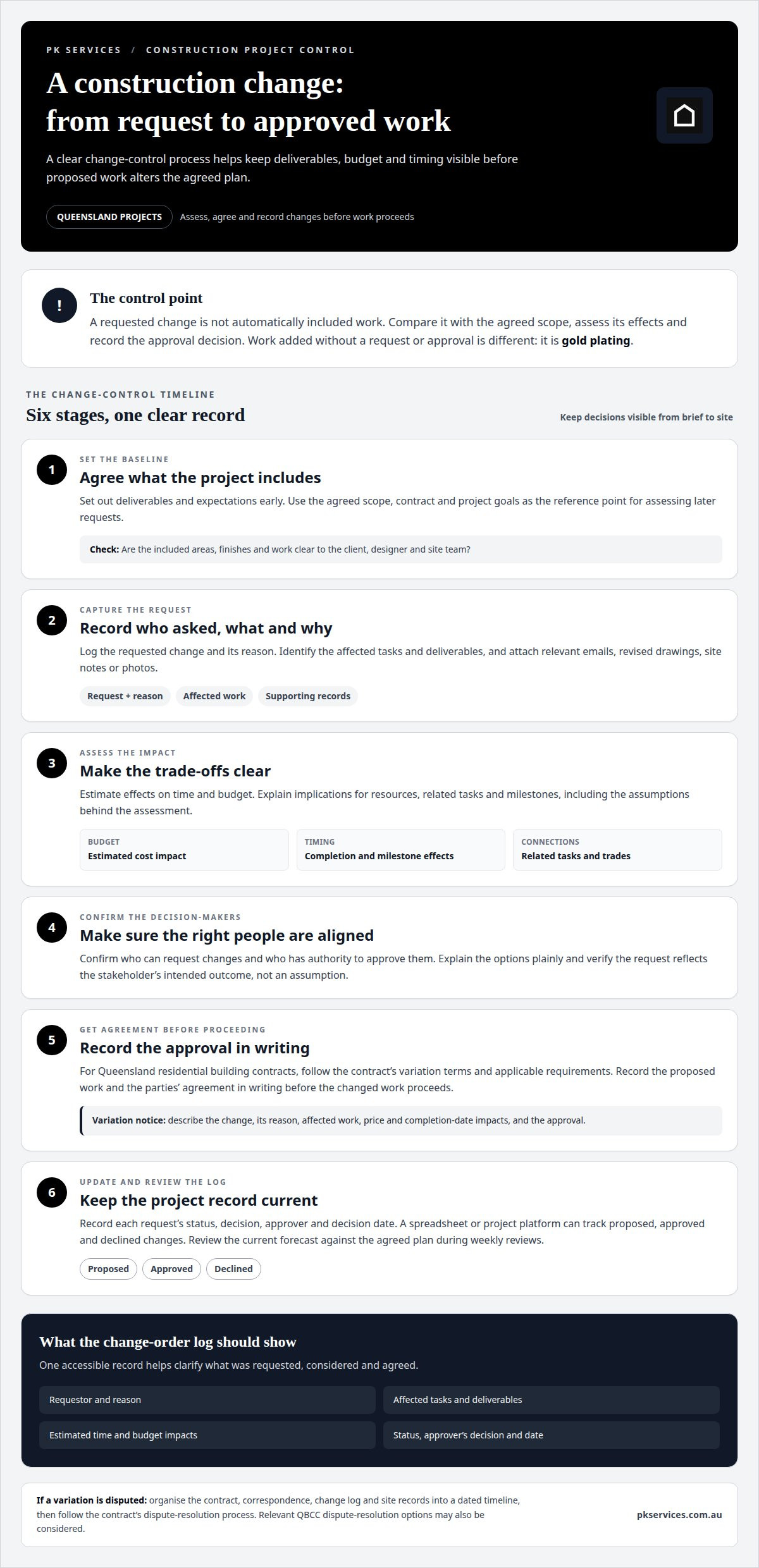
Scope creep is uncontrolled growth beyond the originally agreed work. In Queensland projects, a clear process helps assess requests before they change deliverables, budget or timing.
Change control and approved changes
Change control is the process of assessing, approving and recording proposed project changes. It distinguishes an approved change from scope creep: the parties have agreed to the change and its effects. Gold plating is different. It means adding work or features without a request or approval, such as installing a finish beyond the agreed specification. For Queensland teams, assess each request against the contract and project goals before treating it as included work.
Documenting changes and change-order logs
A change-order log records each request, its status and the decision. Include who requested the change and why, affected tasks and deliverables, estimated time and budget impacts, the approver’s decision and its date. A spreadsheet or project platform can keep the record accessible. Attach related emails, revised drawings, site notes or photos. This creates a clearer record if the parties later disagree about what was requested or approved.
Queensland variation notices and authorisation
For Queensland residential building contracts, follow the contract’s variation terms and applicable requirements. Record the proposed work and the parties’ agreement in writing before the changed work proceeds. A clear notice describes the change, its reason, affected work, price and completion-date impacts, and the approval. Unauthorised variations can lead to disputes about payment, responsibility, timing or whether the work was already included. Any legal consequences depend on the contract and circumstances.
Resolving variation disputes in Queensland
For a variation dispute, organise the contract, correspondence, change log and site records into a dated timeline. Follow the contract’s dispute-resolution process and consider relevant QBCC dispute-resolution options. A project platform or shared spreadsheet can track proposed, approved and declined changes, with dates and supporting documents. This provides a practical record of decisions and helps clarify which work remains in dispute.
Common causes of scope creep
Underestimating construction complexity can turn an achievable plan into an uncontrolled sequence of additions. Unrealistic goals create similar pressure. If a milestone is set before design details are resolved, teams may add work later to meet expectations. For example, a Queensland renovation brief might omit drainage changes, then require extra work after excavation reveals the issue. The original plan no longer reflects the work required.
Unclear requirements can also create conflicting assumptions. Drawings may show one finish while the client expects another, or project documents may not define which areas are included. Design revisions and late requests can then add tasks before their effects are understood. Managing scope creep in construction projects in QLD starts with identifying these gaps during planning, especially when a decision affects connected trades or deliverables.
Watch site progress for warning signs. A crew starting tasks absent from current drawings, repeated verbal requests, or milestones shifting to absorb extra work all deserve attention. For instance, moving a doorway may affect framing, electrical work and finishes. If those linked tasks aren’t considered together, a small request can alter the wider project plan. Recording what changed and why helps distinguish agreed work from uncontrolled additions.
Site conditions, inspection comments and communication gaps can prompt further requests. A concealed obstruction may require redesign; an inspection comment may lead to clarification or revised work. These events don’t automatically mean scope creep. The risk grows when the team assumes each response falls within the original scope without assessing its impact. A practical approach to managing scope creep in construction projects across QLD is to compare each new request with agreed deliverables and milestones. This makes emerging changes easier to assess before they affect progress, sequencing or project expectations.
Stakeholder communication and expectations
Clear communication helps keep the client, designer and site team aligned as project needs evolve. During planning, confirm who can request changes and who has authority to approve them.
Communicating cost and schedule impacts
Communicating impacts means explaining how a proposed change could affect budget, timing, resources and related tasks. This gives each stakeholder a practical basis for deciding whether to proceed. For example, moving a kitchen wall may affect cabinetry, electrical work and the sequence of trades. Explain these connections plainly, even when there’s pressure to keep work moving.
Before seeking approval, set out the requested work, the assumptions behind the assessment and any affected milestones. If revised drawings are needed, identify which decisions depend on them. A weekly review can compare the current forecast with the agreed plan. This helps stakeholders see trade-offs early, rather than discovering schedule pressure after work is underway.
Client communication and transparency
Transparent client communication means sharing changes, decisions and emerging issues consistently. Without it, the client and project team may interpret the same deliverable differently. Use meeting notes to record the decision, responsible person and next action. Keep the project vision visible so each new request can be assessed against the agreed goals.
Verification matters too: confirm that a request reflects the stakeholder’s intended outcome, rather than an assumption passed between team members. A scope tracker can show each request’s status and forecast impacts during weekly meetings. Explain options in plain language, including what may need to move or change if a request is accepted. This supports informed decisions without treating questions as resistance.
Communication works best as a regular part of project planning, not only when problems surface. At design reviews and site meetings, compare expectations with current drawings, deliverables and milestone progress. If a site condition or design revision changes the outlook, raise it early and explain what the team knows. This gives the client time to weigh alternatives and helps stakeholders agree on priorities before related work proceeds.
Construction project scope creep example
Consider a hypothetical residential project by Acme Builders. The original plan covers three storeys, with construction scheduled to take 10 months. The agreed project plan sets out the foundations, structural framing, services and finishes for those three levels. A request to add a fourth floor changes more than the building’s height. It affects the work already planned and the assumptions behind the original schedule.
The added level needs foundation reinforcement and additional structural framing. It also requires more plumbing and electrical work, interior finishes, labour and supervision. These connected tasks can affect trade sequencing and milestone dates. If the team treats the fourth floor as a simple addition, the project’s budget and timelines may no longer reflect the actual work. That’s how uncontrolled scope growth can turn one request into broader impacts.
The useful distinction is what happens next. If the client and builder formally assess the request, document its effects on cost and timing, and approve the revised scope, it becomes an agreed change. If the team starts work on a verbal request without recording its impacts or approval, uncertainty grows. The client may expect the original completion date, while the site team plans around extra work. That gap can strain the relationship.
A clear response keeps the decision connected to the project plan. The team can explain what the fourth floor requires, identify affected milestones and outline the consequences of accepting it. The client can then decide whether to proceed, adjust other deliverables or retain the three-storey design. Document each choice before changed work begins. This doesn’t prevent every change; it makes the effects visible before they spread.
For complex projects, discuss project planning and delivery to keep changing requirements connected to scope, sequence and approvals.
PK Services: Managing the entire process from start to finish
PK Services can help when changing requirements put project scope, coordination or delivery under pressure. Its Business Consulting supports construction businesses with operational challenges, while its end-to-end project management helps keep decisions and project work aligned.
Where site delivery needs additional capability, PK Services also provides trades and contractor services. The right support depends on the project’s needs, whether that means improving business processes, filling an essential site gap or coordinating work across the project. Clear scope and communication remain central to keeping changes visible and expectations aligned.
Contact PK Services to discuss your construction project and the support you need.
Set your next project decision up for clarity
The next scope decision is an opportunity to strengthen how your team works together. Before a new phase begins, make sure everyone involved shares the same priorities and understands how decisions will be handled. This gives the project a clearer basis for responding when new needs arise.
For teams managing scope creep in construction projects in QLD, a practical next step is to identify where project coordination feels stretched. You may need clearer business processes, additional site capability or support managing the work from start to finish. The right focus depends on the challenge in front of you.
PK Services can discuss the project requirements and the support that fits. Contact PK Services for project support and take the next step with a clear view of what your project needs.
Frequently Asked Questions
What is project scope?
Project scope defines the work a construction project is expected to deliver and its boundaries. It connects the agreed outcome with the tasks, specifications and exclusions needed to achieve it. For example, a bathroom renovation scope might identify which rooms are included and whether replacing existing plumbing fixtures is part of the work. Clear boundaries help distinguish a new request from an existing obligation.
What causes scope creep in construction projects in Queensland?
Scope creep often starts with incomplete requirements, design revisions, unexpected site conditions or assumptions that stakeholders interpret differently. For example, a client may expect landscaping to be included, while the builder’s documents cover only the house and immediate access. Unrealistic project goals can create pressure to accept extra work without considering its knock-on effects. Repeated small requests can also shift the overall direction if they aren’t assessed together.
How should Queensland builders define and document project scope before work starts?
Builders should describe the intended outcome in project documents that are clear enough to guide pricing, construction and handover. Set out relevant drawings and specifications, deliverables, acceptance criteria, assumptions and exclusions. For example, state whether a driveway includes its finish and drainage instead of relying on a broad label. Keep the documents consistent with the contract, and date revisions so the team can identify the current version.
How must builders obtain client approval for variations in Queensland?
Builders should follow the variation procedure in the applicable contract and record the client’s decision before proceeding with changed work. The written variation can describe the requested work, why it’s needed, its effect on price and completion timing, and the parties’ agreement. For instance, document a revised kitchen layout alongside any changes to cabinetry or services. Requirements depend on the contract and circumstances, so don’t rely on an informal site conversation alone.
How do scope changes affect construction costs and completion dates in Queensland?
A scope change can affect more than the task being added. It may require extra materials or labour, revised design work, new sequencing or return visits from trades. For example, moving a bathroom fixture after tiling has started may mean rework and affect later tasks. The actual cost and timing impact depends on the change, site progress, resource availability and how the work connects to other project milestones.
What are typical variation fees and cost controls for Queensland construction projects?
There isn’t one reliable variation fee for every Queensland project; the contract and work involved determine the amount. Review how the contract treats changed work, including any stated pricing method or administration charge. Cost controls include requesting an itemised assessment, recording the decision, tracking approved changes against the budget and updating forecasts. Consider labour, materials, design revisions, rework and trade sequencing when assessing a proposed variation.


