

A reinforcement crew can be on site and still lose valuable time if the scope, access or work sequence isn’t ready. For Queensland projects seeking steel fixers for hire QLD, the right fit is about more than filling a trade gap. It means aligning steel fixing with the wider plan for site delivery.
When reinforcement work falls behind, concrete activities and other connected trades may need to adjust their sequence. Clear scope, site readiness and coordination help reduce avoidable delays and rework. This guide explains how to define the work, match trade support to the programme and prepare the site before work begins.
PK Services provides tailored trade support and project management across the project lifecycle in Queensland and New South Wales, drawing on over 15 years of construction industry experience. Use the steps below to plan reinforcement work around your project priorities, from defining the scope through to coordinating delivery.
Key Takeaways
- Define the reinforcement scope using current drawings, schedules, project stages and actual site conditions.
- Assess steel fixers for hire QLD by project fit, including programme, supervision and coordination needs, not headcount alone.
- Prepare work areas, access, inductions and communication pathways so the site team can coordinate the work.
- Agree how supervisors and adjoining trades will share updates and manage interfaces with steel fixing.
- PK Services provides tailored trade support and project management for construction projects in Queensland and New South Wales.
Steel fixers for hire in QLD: define the work before filling the gap
An unfilled steel-fixing requirement can hold up more than reinforcement. If the work area isn’t ready at the planned time, concrete activities and connected trades may need to change their sequence. Before arranging steel fixers for hire QLD, define the scope and site conditions so trade support fits the job, not just a gap in the programme.
Start with the project documents. Reinforcement drawings and schedules clarify what needs to be placed, where it belongs and which stages are involved. For a general overview of what a steel fixer is, consider how the trade’s work connects to the construction sequence. Then compare the documented requirements with the actual work areas and site conditions.
Which project details shape a steel-fixing requirement?
Identify the structures and reinforcement stages in scope, then map them against the programme. A footing stage, for example, has different work areas and interfaces from reinforcement on a suspended slab. Project scale matters, but it doesn’t determine crew size on its own. Timing, access, work duration and the division of responsibilities all affect the support required.
- Which drawings and reinforcement schedules apply to each work area?
- What access, handling space and site conditions will affect the work?
- When must each area be ready, and how does it connect with concrete activities?
- Which supervisors and adjoining trades need to coordinate with the steel-fixing work?
Resolve gaps between the documents and the site conditions before work starts. A useful planning check is to compare each work area against the current drawings, planned start date, access arrangements and required handovers. This makes it easier to align trade support with the programme and identify interfaces that need coordination.
Why Queensland site context matters
Queensland projects vary in location, scale, layout and construction stage. Plan for the logistics of the specific site, including travel routes, access restrictions, delivery areas and space to prepare and complete the work. Weather exposure may also affect work areas or sequencing, so account for it where relevant instead of assuming one approach will suit every project.
Include site inductions, communication pathways and applicable Queensland work health and safety requirements in the plan. Use current guidance and project-specific controls when organising the work. Clear responsibilities and a shared understanding of site conditions help steel fixing connect with the broader construction programme.
What capable steel-fixing support needs to deliver on a QLD site
Effective steel-fixing support is measured by how well the work fits the project, not simply by how many people are on site. The work needs to follow the agreed scope and current drawings, fit the construction sequence, and connect with the site team’s plans for inspections and following activities.
Project-fit steel-fixing support means completing the defined reinforcement work in line with project documents, the programme and site coordination requirements. This gives project managers and supervisors a practical basis for planning, checking progress and managing interfaces.
How scope, drawings and sequencing guide the work
Use the current drawings and reinforcement schedules to plan each work area. If a revision changes the details or sequence, make sure the people coordinating the work have the updated information. This helps prevent work proceeding from an outdated drawing or assumptions that don’t match the documented scope.
The sequence depends on the structure and project plan. Reinforcement may need to be ready for an inspection before concrete activities proceed, but required checks and handovers vary by project. Set out relevant hold points, identify who coordinates them and confirm what must be ready for the next activity. Quality checks should follow the project’s applicable drawings, specifications and documented processes, rather than an assumed universal checklist.
How trade support integrates with the site team
Steel fixing connects with project managers, supervisors and adjoining trades. Agree who directs day-to-day work, how drawing updates are shared and how issues affecting access or sequence are raised. Clear channels help the team respond before a work-area clash or unresolved detail disrupts the programme.
Make quality-control responsibilities clear too: who checks the work, which project records are required and how outstanding items are managed before the next activity. For more on establishing these processes, read the construction quality control management guide.
Steel fixing can involve repetitive handling and physical demands. SafeWork SA’s guidance on steel-fixing manual tasks is a supplementary reference from South Australia, not Queensland-specific guidance. Apply current Queensland WHS requirements and the controls relevant to your project.
For projects seeking steel fixers for hire QLD, PK Services provides trade support that can be coordinated with broader site requirements and project lifecycle management. Explore PK Services’ construction support when planning delivery.
Compare steel-fixing engagement options by project fit, not headcount
No single engagement structure suits every reinforcement package. A defined task at one stage of a build may need a different arrangement from steel fixing that runs across several work areas and requires ongoing coordination with the wider project team. For steel fixers for hire QLD, compare the work, programme and responsibilities first. Crew numbers alone won’t show whether the support fits.
When focused trade support may suit the project
Focused trade support may suit a clear, time-bound requirement, such as completing a specific reinforcement stage or addressing a gap in a planned sequence. It works best when task boundaries are understood and clear day-to-day supervision is in place.
Set out what the work includes, where it starts and finishes, and how it connects with other activities. Agree who provides direction, how progress and issues are reported, and what must be ready before the work begins. These details help trade support integrate with the site rather than operate as a separate workstream.
How subcontracted delivery differs
A subcontracted trade delivery arrangement can suit a defined package where the work scope and delivery responsibilities are set out together. The project team should understand how the package interfaces with drawings, inspections, concrete activities and other trades. Make responsibilities for coordination, supervision, reporting and handover clear at the outset. The right division depends on the project agreement and site structure, not a standard template.
When project-integrated support adds value
Broader project-integrated support may be useful when reinforcement work spans multiple stages or needs to stay closely connected to changing programme priorities. The benefit is linking trade requirements with wider sequencing and project oversight, so decisions about the work can be considered in context.
PK Services brings over 15 years of construction industry experience and provides tailored trade support and project management across the project lifecycle. This informs a project-specific approach, rather than a promise that one structure will suit every site. For further context, explore the full-cycle construction project management guide.
To compare options, consider:
- Scope: Is the reinforcement task clearly defined, or does it span several stages?
- Programme: Is support needed for a discrete work package or ongoing coordination?
- Supervision: Who directs work on site and manages day-to-day priorities?
- Interfaces: How will updates, inspections and handovers connect with other trades?
Trade support can fit smoothly into an active project when scope, reporting lines and communication are clear. Choose the structure around those requirements, not a universal headcount formula.
Prepare a Queensland site for steel fixers: a practical readiness sequence
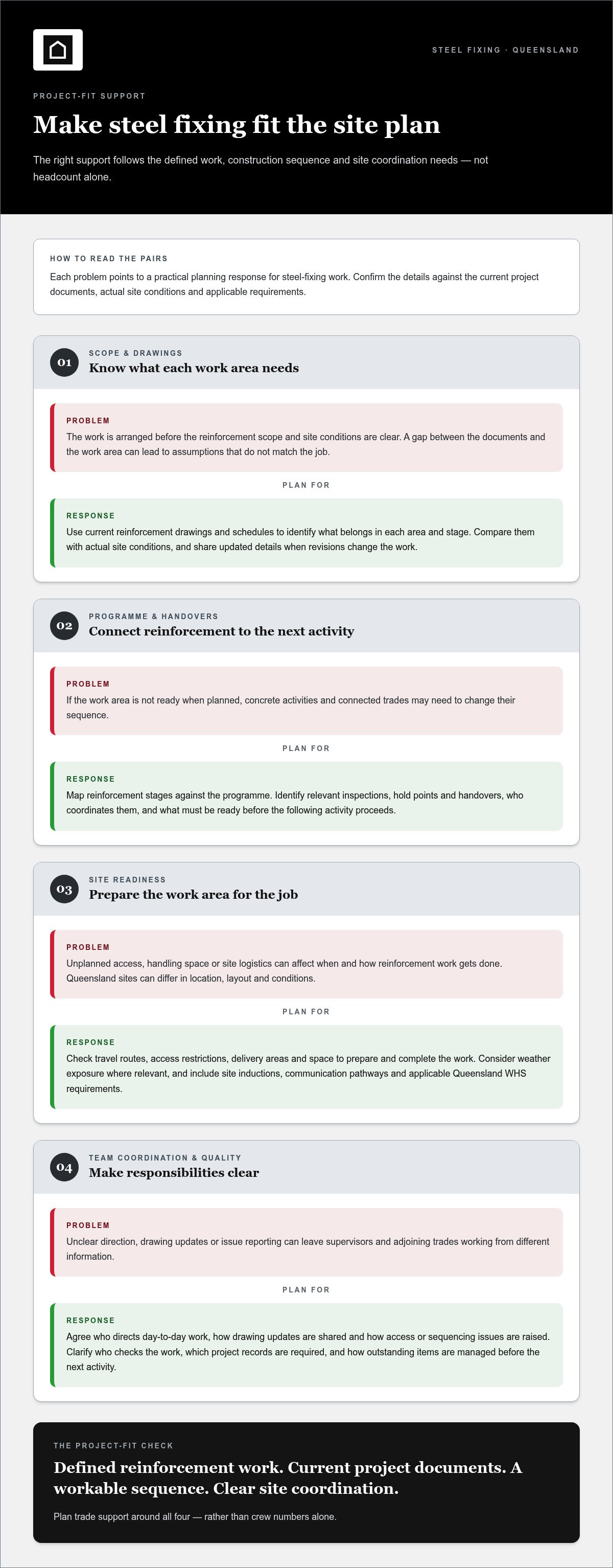
Good site preparation turns a defined work package into a coordinated start. Before steel fixers for hire QLD arrive, align the project information, physical work area and communication plan. This gives site leaders a clear view of what needs to happen first and where interfaces could affect progress.
Site readiness means having the agreed scope, current documents, safe access, programme, inductions and communication channels in place before work begins.
Before work starts: align scope and site information
- Confirm the work package. Identify the reinforcement stage and work areas, including boundaries and interfaces with other activities.
- Check project information. Make current drawings, reinforcement schedules and relevant site instructions accessible to the people coordinating the work. Resolve document questions through the project’s established process.
- Prepare access and work areas. Consider entry routes, material delivery and laydown areas, work space and site restrictions. Conditions vary, so plan around the actual location and work area.
- Align the programme. Confirm planned start points, sequence, relevant inspections and connections to concrete activities. Make dependencies visible to supervisors and adjoining trades.
- Organise inductions and site controls. Address site induction arrangements and applicable project safety information before work starts. Use current Queensland WHS requirements and site-specific controls; a generic checklist is not a substitute.
- Set communication channels. Agree who provides day-to-day direction, how updates are shared and where issues or changes should be escalated.
During delivery: keep coordination visible
Readiness continues once work is underway. Use agreed progress updates to flag completed areas, constraints and upcoming interfaces. Coordinate inspections and adjoining activities so the next task can be planned with accurate information, not assumptions about what is ready.
If the scope, drawings or sequence change, communicate the update through the project’s established process. Make clear who needs to know and how the change affects work areas, timing or handovers. This keeps site leadership and trade teams working from the same information.
For more on project-level checks before engaging trade support, read the construction subcontractor vetting guide. PK Services brings construction experience and tailored trade support to site requirements. Discuss trade support for your Queensland project.
Engage PK Services for steel-fixing support on your QLD project
Steel-fixing support works best when it reflects the project’s needs, not a generic workforce plan. PK Services supplies experienced trades and contractors to construction sites in Queensland and New South Wales, drawing on over 15 years of construction industry experience.
Trade support can be shaped around the defined work package and considered alongside programme coordination and project management needs. The focus is practical: understand where reinforcement work fits, what the site requires and how the trade activity connects with the wider project.
A trade solution shaped around the project
Each project has its own scope, stage and site conditions. PK Services takes a tailored approach to trade support, considering the requirements of the work and how they sit within the project lifecycle. For a defined reinforcement stage, that means understanding the work package and its interfaces. Where wider coordination is needed, trade support can sit alongside broader project management expertise.
This project-focused approach keeps the conversation on delivery requirements rather than headcount alone. The right support depends on your scope, programme and site coordination needs.
What to include in your project enquiry
A clear starting brief helps frame the discussion. Share the details that explain the work and its place in the construction sequence:
- Site location: Where in Queensland is the project, and what site access considerations affect the work?
- Work package: Which structures, reinforcement stages or work areas are involved?
- Programme: What stage is the project at, and how does the steel-fixing work align with upcoming activities?
- Project information: Which current drawings, schedules or site instructions describe the scope?
- Interfaces: Which supervisors, adjoining trades, inspections or handovers need to be coordinated?
You don’t need to turn the first enquiry into a lengthy report. A concise overview of the location, scope, timing, access and key interfaces gives the discussion a useful foundation. As the requirements become clearer, the support can be considered in the context of your project priorities.
If you’re planning steel fixers for hire QLD, bring these project details together and start a conversation with PK Services. Discuss your Queensland project and its steel-fixing support requirements.
Set your reinforcement work up for a stronger start
Steel-fixing delivery starts with a clear brief. Define the scope, check current project information and prepare access, sequencing and communication before work begins. Then choose trade support around the project’s requirements, supervision needs and site interfaces, not a generic headcount target.
For projects seeking steel fixers for hire QLD, PK Services supplies experienced trades and contractors for construction sites in Queensland and New South Wales. The company brings over 15 years of construction industry experience, with tailored trade solutions and project lifecycle expertise to connect reinforcement work with wider delivery priorities.
Share your Queensland site location, work package, programme and key coordination needs to start a focused conversation. Discuss steel-fixing support for your Queensland project with PK Services.
Frequently Asked Questions
Is it worth hiring steel fixers for a Queensland construction project?
It can be worthwhile when your project needs trade support matched to a defined reinforcement scope, programme and site team. First clarify the work package, timing, supervision arrangements and how steel fixing connects with inspections and following activities. PK Services supplies experienced trades and contractors to construction sites in Queensland and New South Wales, with trade solutions tailored to project needs rather than a one-size-fits-all approach.
What should I include when requesting steel fixers for hire in QLD?
Share the project location, reinforcement scope, current drawings or schedules, programme and site access details. Include the project stage and important interfaces with supervisors, concrete activities or other trades. This gives a practical picture of the work and its place in the sequence. Requirements vary between sites, so describe the actual project rather than assuming a standard crew size or engagement structure.
How do steel fixers fit into a construction project programme?
Steel fixing needs to align with relevant drawings, work sequencing, inspections and the construction activities that follow. Before work begins, establish who coordinates the work, how progress is communicated and how changes are managed through site processes. The exact sequence depends on the structure and project methodology. Planning these connections early helps the team coordinate handovers and respond clearly if scope or timing changes.
Can PK Services provide steel-fixing support in Queensland?
PK Services supplies experienced trades and contractors to construction sites in Queensland and New South Wales. With over 15 years of construction industry experience, the company tailors trade solutions to project requirements and brings a project lifecycle perspective to delivery. Share the location, work scope, programme and site conditions to focus the discussion on your project’s requirements.
What site preparation is needed before steel fixers start work?
Prepare the agreed work scope, current drawings and schedules, access arrangements, work areas and programme information. Set communication channels with site leadership and identify interfaces with inspections, concrete activities and other trades. Organise site inductions and relevant safety processes in line with project requirements. Preparation varies by site, structure and project stage, so base the plan on actual conditions rather than a generic checklist.
What Queensland safety requirements apply to steel-fixing work?
Requirements depend on the work, site conditions and applicable Queensland legislation and guidance. Project teams should use current WorkSafe Queensland information, relevant project procedures and applicable technical specifications to plan controls for specific tasks. Don’t rely on a generic checklist as a substitute for site-specific risk planning. Verify legal references and compliance details against current authoritative guidance before applying them to a project.
How can trade support integrate with project management?
Integration starts with a clear scope, agreed responsibilities, current project information and practical communication between site leadership and trade teams. Consider trade requirements alongside programme stages, work-area access and interfaces with other activities. This helps connect site execution with wider delivery priorities. PK Services combines trades and contractor services with project lifecycle experience, supporting tailored approaches for construction projects in Queensland and New South Wales.


