

A delayed build needs a recovery plan, not a rushed timetable. To decide what to do when a construction project is behind schedule in Brisbane, compare actual progress with the baseline schedule, identify the cause and assess which milestones and critical-path activities are affected. Then adjust the sequence or resources where practical, record the changes and track performance against the revised plan.
A missed task can affect trades, materials and the project’s finish date. The right response starts with understanding the delay, not guessing at a new completion date. This guide explains how to assess time and cost impacts, choose workable recovery steps and keep everyone informed. Regular tracking against the baseline helps show whether the plan is bringing the project back on course.
Key Takeaways
- Review site records, weather updates and supplier communications to pinpoint what caused the delay before changing the plan.
- Assess how the delay affects completion milestones, labour, materials and costs, with particular attention to activities that control the finish date.
- Choose recovery measures that fit the work and available resources, weighing added crews or overlapping tasks against cost and rework risks.
- Track progress against a clear schedule baseline and share changes, responsibilities and expected actions with everyone involved.
Assess delay impacts on cost, time, staffing and materials
Start with project records and link each delay to its effect on the remaining work. This gives you a sound basis for schedule adjustments, cost decisions and any claim.
-
Analyse past delays and their impacts
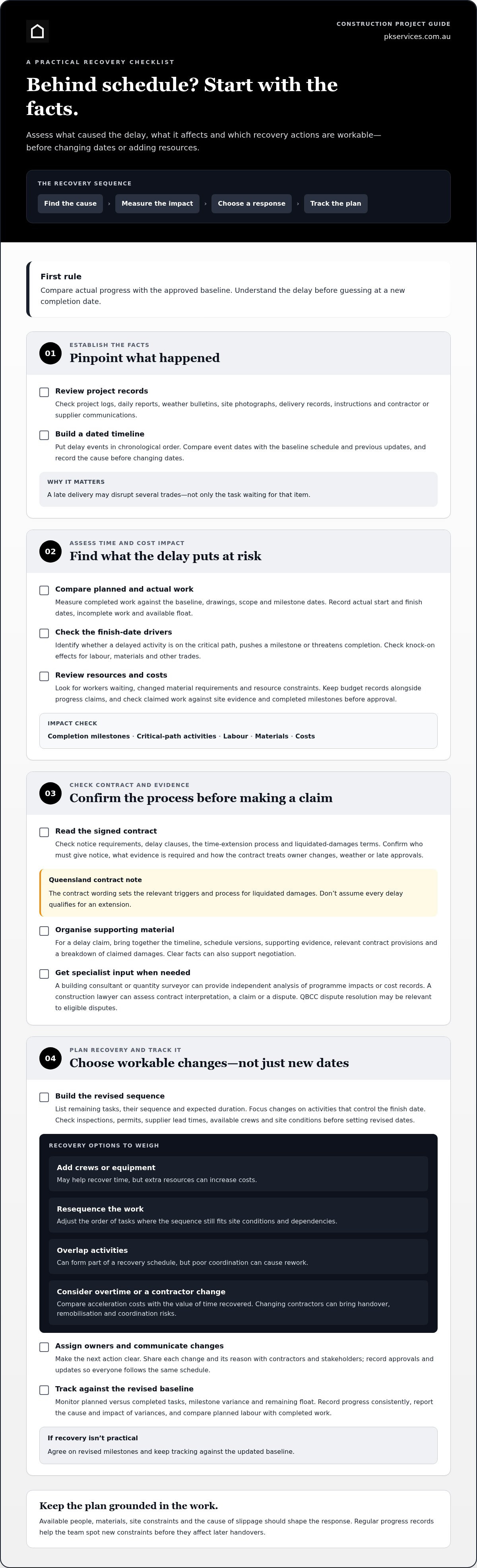
Review project logs, daily reports, weather bulletins and contractor or supplier communications to identify each delay’s cause. Compare event dates with the baseline schedule and previous updates. Check whether the delay affected a critical-path activity, pushed a milestone, left workers waiting or changed material requirements. A late delivery, for example, may disrupt several trades, not just the task awaiting that item. Record the cause before changing dates.
-
Review contract delay clauses and time extensions
Read the signed contract’s notice requirements, delay clauses, time-extension process and liquidated-damages terms. Check who must give notice, what evidence is required and how the contract treats owner changes, weather or late approvals. In Queensland, the contract wording sets the relevant triggers and process for liquidated damages. A construction lawyer can assess how a clause applies to the facts. Don’t assume every delay qualifies for an extension.
- Document cause and impact in a dated timeline, with site photographs, delivery records, instructions and schedule versions. Time-impact analysis puts events in chronological order and assesses their effect on completion. For a delay claim, assemble supporting evidence, relevant contract provisions and a breakdown of claimed damages. Clear facts can also support negotiation. QBCC dispute resolution may be relevant to eligible disputes, so organise the timeline and contract records before pursuing that path.
- Engage a building consultant or quantity surveyor when you need independent analysis of programme impacts or cost records. Seek a construction lawyer’s advice when contract interpretation, a claim or a dispute needs legal assessment. Before accelerating work, compare the cost of extra crews, equipment or overtime with the value of time recovered. Changing contractors can add handover, remobilisation and coordination risks, so weigh these against the remaining work and contract obligations.
What Should You Do When a Construction Project Falls Behind Schedule?
Compare site progress with the approved programme before changing dates or assigning extra crews. Build the recovery plan around the work that controls completion.
-
Compare progress with the original schedule
Measure completed work against the baseline schedule, drawings, scope and milestone dates. Record actual start and finish dates, then identify incomplete work and available float. Check whether the planned sequence still fits site conditions and contractor updates. This comparison highlights slippage and shows whether a late activity threatens the finish date or can move without disrupting other trades.
-
Track progress against the revised plan
Set measures for the revised programme, such as planned versus completed tasks, milestone variance and remaining float. Record progress consistently and report the cause and impact of each variance. Compare planned labour with completed work to spot resource constraints. Keep budget records alongside progress claims, checking claimed work against site evidence and completed milestones before approval.
-
Create a recovery schedule
List remaining tasks, their sequence and expected duration. Focus changes on activities that control the finish date. Check inspections, permits, supplier lead times and available crews before setting revised dates. A recovery schedule can add crews or equipment, resequence work or overlap activities. Extra resources can increase costs, while overlapping tasks can cause rework if coordination is poor.
- If you’re deciding what to do when a construction project is behind schedule in Brisbane, make the next action clear and assign an owner. Share the recovery plan with contractors and stakeholders, explaining each change and its reason. Record approvals and updates so everyone follows the same schedule. If the delay cannot be recovered practically, agree on revised milestones and track progress against the updated baseline.
- When deciding what to do if a construction project is behind schedule in Brisbane, ground the recovery plan in available people, materials and site constraints. Check whether actions address the cause of slippage rather than simply moving dates. Clear ownership and consistent progress records help the team respond to new constraints before they affect later handovers.
Planning, scheduling and project management
Build a practical plan around the work, people and site conditions. Regular updates help the team act before constraints disrupt the next stage.
-
Structure project scope and planning
Break the project scope into manageable phases with clear handovers and dependencies. For each phase, define the required work, responsible trades and resources before setting dates. Check that the schedule reflects the approved scope and available crews. If a change affects the sequence, assess its impact on dependent tasks before moving milestones or committing resources.
-
Coordinate trades through short-term planning
Review upcoming work with foremen, subcontractors and suppliers in regular, short-term planning meetings. Look ahead for access conflicts, missing information, material constraints and inspections that could hold up a trade. Confirm who owns each action and when it must be completed. Plan crew handovers clearly, so contractors aren’t moved between work areas without a defined priority.
-
Plan around weather and downtime
Use local weather forecasts and site conditions to plan exposed work such as excavation or concrete placement. Allow for wet-weather downtime where it could affect safe access, ground conditions or work quality. If rain stops one activity, identify another ready task that can proceed without creating a trade clash. Check equipment availability too, as a breakdown can change the sequence even in suitable weather.
- Keep the plan realistic by checking constraints before accelerating work. Confirm supplier lead times, inspection points, permit requirements and design decisions that affect the next stage. Architects and consulting engineers, such as the multidisciplinary team at linzergroup.com, can help resolve design questions or review submittals promptly. Record schedule changes and explain their effects on cost, time and responsibilities. If the delay cannot be recovered sensibly, update milestones and communicate revised expectations to the project team.
Schedule baselines and performance tracking
A schedule baseline gives the team a fixed reference for measuring change. Track performance in detail to see whether adjustments are bringing the finish date forward or simply shifting delays.
- Set a controlled baseline using the approved scope, task sequence, durations and milestone dates. Keep the version used for comparison, then record authorised changes separately. This preserves a clear view of the original commitment and the current forecast. Without that distinction, stakeholders may mistake revised dates for actual progress or overlook how the programme has changed.
- Choose key performance indicators that reveal schedule movement, not just activity. Track planned against completed tasks, milestone variance, critical-path status and remaining float. A task marked complete should match the agreed work and site evidence, not just a percentage entered in a report. Compare each measure consistently across schedule updates to identify trends and emerging constraints.
- Review the measures together before deciding on an adjustment. If completed tasks match the plan but a critical-path activity slips, the finish date may still be at risk. If a delayed task has float, the team may have room to resequence work. Record the cause, impact, decision and responsible person in the same update, so the next review can assess whether the response worked.
- Share a concise performance report with the owner, project manager and affected contractors. Show the baseline date, current forecast, milestone variances, outstanding decisions and required actions. Use the same reporting cut-off and definitions each time to keep comparisons meaningful. If the forecast changes, explain why and what it means for cost, resources and handovers. This turns progress data into decisions, rather than a record that arrives after the finish date has moved.
PK Services: Business Consulting
PK Services helps construction businesses turn delay analysis into practical project decisions. Its Business Consulting supports operational planning, while Trades & contractor services help address essential gaps on site. For projects needing coordinated oversight, PK Services manages the process from start to finish.
Consider this support when schedule tracking shows recurring constraints, trade coordination is under pressure or the recovery plan needs clearer ownership. Business advice can connect site progress with resource planning and project operations, so decisions reflect the work still required. The right support depends on the challenge: a site labour gap calls for a different response than unclear priorities or disconnected planning.
To discuss your construction project, contact PK Services or visit pkservices.com.au.
Make the Next Schedule Decision Count
A delayed project can become a turning point in how decisions are made. Use the next planning review to establish who owns each decision, what information they need and how the outcome will be recorded. This makes schedule changes easier to follow and helps prevent unresolved issues from quietly affecting later work.
If you’re weighing what to do when a construction project is behind schedule in Brisbane, focus on the next decision that will unblock progress. Set a clear action, assign responsibility and agree how you’ll judge whether it worked. Keep the process practical. A plan only helps when the people responsible can act on it and report what changed.
PK Services can be part of that next step. Contact PK Services to discuss your project’s next move and keep building with a clearer direction.
Frequently Asked Questions
Who’s in charge?
Overall responsibility usually sits with the person assigned project leadership in the contract or governance plan. The project manager coordinates decisions and reporting, while the owner or principal may need to approve scope changes, extra funding or revised milestones. For example, name one person to consolidate trade updates and escalate decisions, so conflicting instructions don’t leave contractors waiting.
What are the first steps when a construction project is behind schedule in Brisbane?
Start by confirming which work is affected and whether the site can continue safely and productively. Bring the relevant supervisor and contractors together, identify immediate access or sequencing conflicts, and assign actions with clear owners. If one crew can’t enter a work area, for example, check whether another approved task can proceed without creating rework or disrupting a later handover.
What notice requirements and deadlines apply when claiming an extension of time in Queensland?
The contract sets the notice process and deadlines, so review its extension-of-time clause as soon as a delay arises. Identify the required recipient, notice method, triggering event and supporting details, including any ongoing updates. Record when the delay became apparent and diarise each contractual deadline. A late or incomplete notice can affect a claim, so seek legal advice if the wording is unclear.
How do Brisbane weather, flooding, approvals, and supply shortages affect construction schedules?
Each can restrict work or delay the next task. Heavy rain or flooding may limit site access, excavation or concrete work, while approval and inspection hold-ups can leave trades unable to proceed. A late material delivery may also disrupt dependent tasks. Link each event to the affected activity, then check whether a suitable alternative task or material can keep other work moving without compromising coordination or quality.
What are the Queensland rules for liquidated damages for construction delays?
In Queensland, the signed contract sets the triggers and process for liquidated damages. Review its delay clauses, notice requirements, time-extension process and required evidence. A construction lawyer can assess how the clause applies to the facts.
How to resolve construction delay disputes in Queensland, including QBCC dispute resolution?
Document the delay in a dated timeline, with supporting site records, contract provisions and evidence of its impact. Clear facts can support negotiation. QBCC dispute resolution may be relevant for eligible disputes, and a construction lawyer can advise when legal assessment is needed.


