

Clear communication is part of the build, not an extra. A client communication plan for construction projects in NSW should specify who receives updates, how they’re shared and how often. Cover progress, budget, milestones and changes, with timely explanations when delays arise.
When contractors, subcontractors and clients don’t share the same information, expectations can quickly diverge. A consistent communication rhythm helps everyone understand decisions, responsibilities and next steps.
This guide explains why communication matters on construction projects and how to build a practical plan for your team. You’ll learn how to include contractors and subcontractors, record changes and decisions, and raise issues transparently, including the steps underway to resolve them.
Key Takeaways
- Set a clear update rhythm and explain schedule changes with the reason and revised timeline.
- Make project information accessible to contractors and subcontractors through channels that suit how they work.
- Record decisions, scope changes and actions in one place so the project team can follow what happens next.
- Raise issues early, outline practical options and invite client feedback to keep decisions transparent.
Why is communication important in the construction industry?
Communication keeps the client, contractors and subcontractors aligned on the programme. A client communication plan for construction projects in NSW should set out update timing, audiences and what each update covers.
Yes, a project-specific template is a practical starting point. Use the Sydney Gateway Road Project or M7-M12 Integration Project communication plans as examples of project documents, then tailor the content to your stakeholders and works.
Share programme updates
1. Set a regular date for progress updates, such as weekly or bi-weekly, and share them with the client and relevant project team members. Keep the update tied to the current programme, not an old version.
2. Explain what has changed and how it affects upcoming milestones, dependencies and planned work. For example, if a supply issue affects a scheduled task, identify the affected activity and what work can continue. Avoid reporting progress without noting the impact on the sequence of work.
Include weather and supply chain issues when they could affect timing. This helps the client understand why the programme may need to change, rather than seeing only a revised date.
Communicate revised schedules
1. Inform the client about a delay as soon as possible. State what caused it, which activities or milestones are affected, and what the team is doing next. Keep the explanation factual and separate confirmed impacts from work still being assessed.
2. Provide a revised timeline with the reason for the change. Check how the delay affects linked tasks, access arrangements and later milestones before sharing dates. A change to one activity can shift other work, so don’t present an isolated date as the full programme impact.
Record each update and decision in the project’s communication record. Make the current schedule easy to identify, and state which version replaces the previous one. If new information changes the outlook, send another update so the client isn’t relying on an outdated timeline.
Use the same process for delays caused by weather, supply constraints or changing site conditions. Explaining the cause and sharing revised programme details helps clients make informed decisions and keeps expectations aligned.
Communication challenges for contractors and subcontractors
Create a communication process that connects site teams with the client and keeps decisions traceable. Include contract administration, notices and document control from the outset.
NSW payment disputes may involve the Building and Construction Industry Security of Payment Act 1999 (NSW), which has strict processes and timeframes. Record payment claims and related correspondence, and treat legal or payment disputes separately from routine project updates.
Plan for missed instructions, limited access to email or computers, unrecorded scope changes and unclear approval authority. Site workers may rely on supervisors for updates, so information needs a clear route to the people doing the work.
-
Review communication risks and requirements
Identify who gives instructions, who approves changes and how site teams receive updates. Check the contract for required communication methods, notice formats, recipients and timeframes. Don’t assume a text message or site conversation meets a formal notice requirement. Include contractors and subcontractors in the communication flow, while keeping approval authority clear for each decision.
-
Manage correspondence and contract notices
Follow the contract’s process for formal notices, including the specified recipient and delivery method. Keep notices separate from general emails or messages, and record when each was sent and received. A delay update and a contractual notice, for example, may serve different purposes. Don’t rely on an informal conversation to satisfy a contract requirement.
- Document each scope change before additional work proceeds. Describe the changed work, its effect on timing and budget, and the client’s approval. Record agreed changes and additional work formally under the contract. A verbal request on site can be misunderstood, especially when the contractor, subcontractor and client have different expectations.
- Keep correspondence, decisions, payment records and current documents in a shared, organised system. Use clear file names and identify which drawing or instruction is current. Since some workers have limited access to email or computers, pass essential updates through supervisors and confirm they reach affected trades. A coordinated project delivery approach can help connect site communication with the wider process.
Identifying and resolving issues transparently
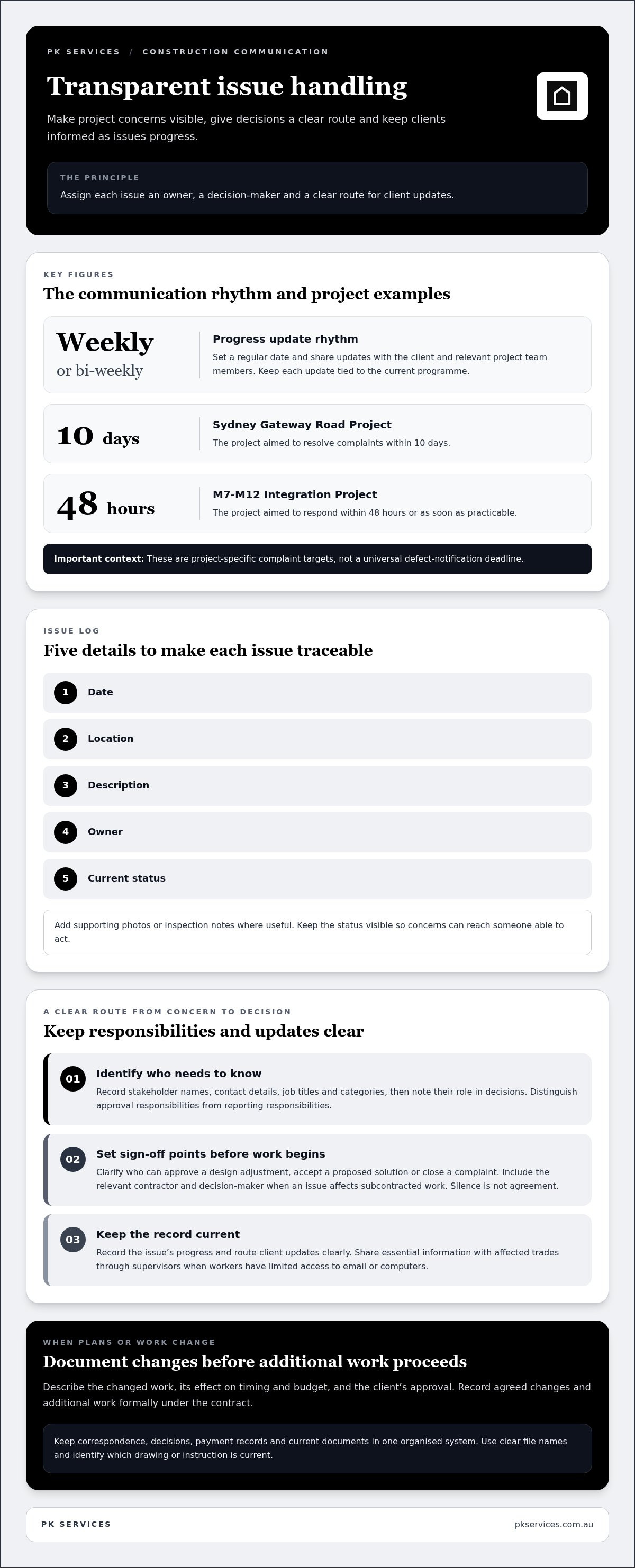
Assign each issue an owner, a decision-maker and a clear route for client updates. This makes the status visible and helps concerns reach someone who can act.
For defects and complaints, use the notification and response process set out for the project. NSW project examples use different complaint targets: Sydney Gateway aimed to resolve complaints within 10 days, while the M7-M12 Integration Project aimed to respond within 48 hours or as soon as practicable. These are project-specific processes, not a universal defect-notification deadline.
- List every stakeholder who needs to know about project issues. Record their name, contact details, job title and stakeholder category, then note their role in decisions. For example, distinguish the client’s approval role from the site supervisor’s responsibility to report a workmanship concern. This helps prevent sensitive or urgent information going to someone without authority.
- Set sign-off points before work begins. Identify who can approve a design adjustment, accept a proposed solution or close a complaint. If a defect affects a subcontractor’s work, include the relevant contractor and decision-maker in the review. Keep the approval route clear so teams don’t mistake silence for agreement.
- Log each issue with its date, location, description, owner and current status. Add supporting photos or inspection notes where useful, then record the next action and due point without promising an unsupported resolution date. During a site inspection, for example, note the affected area and who will assess it. Update the record when findings or actions change.
- Tell the client what happened, the possible impact, the options under consideration and the action underway. Invite feedback while choices remain open. For a complaint, acknowledge the concern, explain how it will be handled and keep the client informed as the status changes. Close the record with the decision, agreed action and communication sent.
Why communication matters on construction projects
Use communication to create shared expectations, not just circulate information. Every meeting, drawing and decision should help the client and project team understand what is being built and why.
- Involve the client in major design and delivery decisions before they become difficult to change. Ask them to review relevant plans and explain how choices affect the finished work. For example, compare a blueprint with a rendering so the client can discuss layout and appearance. Record the decision and who approved it.
- Match each message to the decision it needs to support. Use an on-site discussion for immediate coordination, then record the outcomes by email or in the project record. A one-hour all-hands meeting can bring the team together to align on a complex issue. Finish by confirming actions, owners and the next decision point.
- Make technical information useful to each audience. A client may need a progress photo and a plain-language explanation, while a trade needs the relevant drawing or instruction. Give both groups the same current information to help prevent different interpretations of a design choice or work sequence.
- Connect individual decisions to the agreed project scope. If a client requests a different finish, explain how that choice relates to the documented work and which decisions follow. Clear expectations help the client understand what’s being discussed, while contractors coordinate their work against the same agreed direction.
- Close the communication loop after every important discussion. Send a concise summary of decisions, unresolved points and next actions. After a design review, for example, circulate the agreed selection and identify any remaining approval. This record gives the client and project team a common reference as work progresses.
For help coordinating project delivery from start to finish, explore construction project support.
PK Services: Business Consulting
PK Services can help when communication gaps point to wider project coordination or operational challenges. Its Business Consulting supports construction businesses looking to strengthen how work is organised, while Trades & contractor services can help address essential gaps on site.
For projects that need joined-up coordination, PK Services can manage the process from start to finish. This can suit teams balancing delivery tasks with contractor coordination and client expectations. The right support depends on the project’s needs and where clearer coordination will make the greatest difference.
Visit pkservices.com.au to discuss your construction project with PK Services.
Make communication part of the next project decision
A client communication plan for construction projects in NSW works best as a living project tool, not a document filed away after kickoff. Build in a review whenever the project enters a new phase, a key decision is due or responsibilities shift. This keeps the plan useful as the team and its priorities change.
For your next project, choose one upcoming decision and map the communication around it: who needs to contribute, who approves the outcome and how the decision will be recorded. This practical test can reveal whether responsibilities are clear before pressure builds. Adjust the process where handovers or approvals could be missed.
PK Services can support construction businesses through Business Consulting, Trades & contractor services and managing the entire process from start to finish. If you’re ready to discuss support for your project, contact PK Services today.
Start with a clear next step to give your team a stronger foundation for the work ahead.
Frequently Asked Questions
What should a client communication plan for a construction project in NSW include?
Include the project’s communication purpose, stakeholder groups, update schedule, approved channels and escalation path. A client communication plan for construction projects in NSW should also set out document control practices, such as where current drawings and meeting records are stored. Add a review point for each project phase so the plan can adapt when the team, work sequence or client priorities change.
How do you define communication roles and responsibilities between a NSW builder and client?
Set out who provides information, who makes recommendations and who approves decisions. For example, a builder may report a design conflict, while the client’s nominated representative decides whether to accept a proposed change. List delegated contacts and approval limits in the project plan, then share the roles with relevant trades. This helps prevent duplicate instructions or decisions by someone without authority.
How often should construction progress updates be sent to clients in NSW?
Agree on an update rhythm that reflects the project’s pace and decision needs. Weekly or bi-weekly updates are practical options for keeping clients informed, with additional communication when a significant decision or change needs attention. A fit-out with frequent selections may need closer contact than a project with fewer client decisions. Record the agreed schedule at project commencement and review it as work changes.
What communication channels work best for construction projects in NSW?
Choose channels that clients and site teams can access and use confidently. Email can carry formal summaries and documents, while face-to-face meetings or on-site discussions help resolve complex details. Instant messaging may suit quick coordination, but don’t rely on it as the only record of an approval. For workers with limited computer access, route essential information through supervisors and confirm it reaches the relevant crew.
How should variations, delays and cost changes be communicated to construction clients in NSW?
Explain a proposed change before work proceeds, including its reason, the affected work, likely schedule impact and any cost implications. Ask the client to approve the variation through the process set out in the contract. For a delay, provide the cause and revised programme information. Keep the written record with the relevant instruction so the client and project team can refer to the same agreed scope.
How should client approvals and project decisions be documented on NSW construction projects?
Record each decision in writing with its date, subject, decision-maker and outcome. Attach or identify the relevant drawing, specification or variation so the approval has clear context. After a meeting, send attendees a concise record of agreed actions and unresolved items. Store it with project documents using a consistent naming system to distinguish current approvals from superseded instructions.


