

Commercial electrical work needs a clear scope and a clear service area. This guide focuses on Brisbane and surrounding suburbs, explaining how reliable commercial electricians in Brisbane fit into building and apartment projects.
Establishing whether a site is within the service area is a useful first step. The type of commercial work, its scope and the site’s access requirements all shape how a project is planned and delivered.
We’ll also explain where trades and contractor support can fit into construction work, and when an electrical issue needs urgent attention. If someone has received an electric shock or there is a fire, call 000 immediately, according to the Australian Government.
Key Takeaways
- Understand what to clarify about your building’s location and project scope when planning commercial electrical work.
- See how the needs of commercial buildings and high-rise apartments can shape the work involved.
- Learn what details to have ready when getting in touch, so you can explain your project clearly.
- Explore how business consulting, trades and contractor services, and end-to-end process management can support construction projects.
Do you service Brisbane and surrounding suburbs?
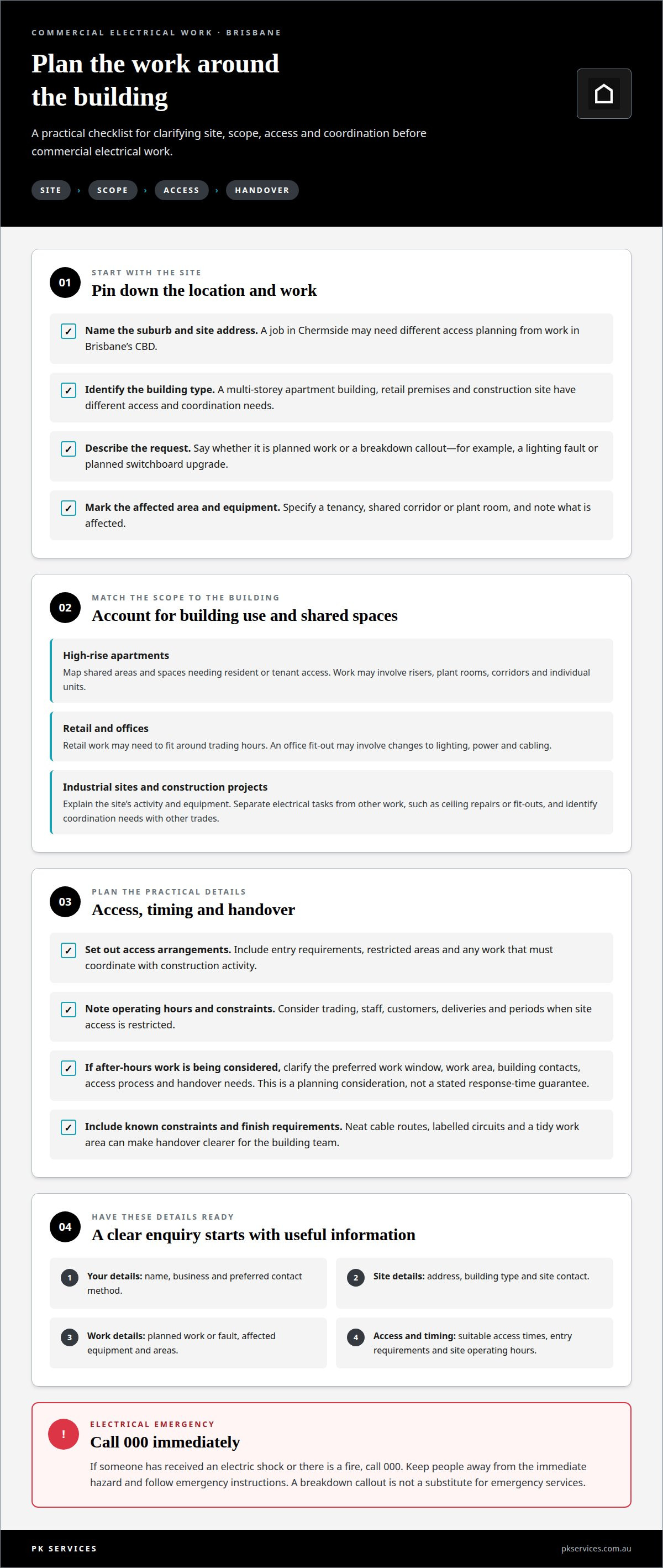
This guide focuses on Brisbane and surrounding suburbs. For a building manager, owner or construction team, start by identifying the site address. A job in Chermside may require different access planning from work in Brisbane’s CBD. Consider the suburb alongside the building type, work scope and access arrangements.
Commercial electrical services can include planned work and breakdown callouts. The fault, affected equipment and impact on building operations help define the response. A failed light in a shared corridor differs from a fault affecting a commercial kitchen or apartment common area. Installations, repairs and upgrades also need coordination around occupied spaces and other trades.
- Describe the site and the issue, such as a lighting fault or planned switchboard upgrade.
- Note which areas are affected, including a tenancy, shared corridor or plant room.
- Explain access arrangements and any work that must coordinate with construction activity.
For a project in Brisbane’s northern suburbs or elsewhere in the city, naming the suburb and building type makes the initial scope clearer. A multi-storey apartment building, retail premises and construction site each have distinct access and coordination needs. Clear information supports practical planning for an installation, repair or upgrade.
Safety comes first during an electrical emergency. In Australia, call 000 immediately if someone has received an electric shock or there is a fire, according to the Australian Government. Keep people away from the immediate hazard and follow emergency instructions. Don’t treat a breakdown callout as a substitute for emergency services in those circumstances.
Reviews can help assess a service’s reputation, but details matter more than a rating alone. Look for descriptions of the work, site type and communication. A specific account of a commercial repair or apartment upgrade gives more context than a brief comment. When looking for reliable commercial electricians in Brisbane, match stated experience to your project’s actual requirements.
Commercial building and high-rise apartment electrical work
Commercial buildings and high-rise apartments need careful planning around shared spaces, building access and occupied areas. A lighting upgrade in a foyer, repairs to apartment common areas and new cabling for a tenancy each have different work boundaries. Identify the affected area, equipment and access route before planning the work.
In an apartment tower, electrical work may involve coordinating access to risers, plant rooms, corridors and individual units. Building managers can map which areas are shared and which require resident or tenant access. A clear scope also separates electrical tasks from other construction work, such as ceiling repairs or fit-outs.
Commercial electrical work across Brisbane varies with a building’s use. Retail work may need to fit around trading hours, while an office fit-out may involve changes to lighting, power and cabling. Industrial premises can have different equipment and operational needs. Describe the site’s activity and equipment so the work can be scoped appropriately.
Workmanship matters beyond the visible finish. Neat cable routes, labelled circuits and a tidy work area, for example, make handover clearer for the building team. Include required repairs, proposed upgrades and known constraints in the project scope. These details support coordination and help prevent avoidable clashes with other trades.
After-hours electrical work may suit sites where daytime activity makes access difficult or disruptive. It still requires practical planning: agree on the work area, access arrangements, building contacts and how the area will be handed back. A clear description of the issue helps set priorities, but does not establish an after-hours response time.
For construction projects involving multiple trades, coordinated contractor support can help organise responsibilities and work stages. Clear communication between the building team and contractors keeps electrical tasks connected to the wider project plan.
Business hours and contact details
Business hours affect how electrical work fits around trading, staff and building access. A lighting repair in a shop may affect customers, while a switchboard project can interrupt several work areas. Decide which hours suit the site and note periods when access is restricted. This gives the project team useful context when discussing the job.
To enquire about project support, contact PK Services through the details on its website. Include your name, business, site address and preferred contact method. Add a concise description, such as flickering lights in a reception area or a planned switchboard upgrade. Clear details help focus the conversation on the work required.
- State whether the request concerns planned work or an electrical fault.
- Describe the affected equipment and areas, such as a tenancy or shared workspace.
- Give suitable access times and identify any building entry requirements.
- Include a contact person who can discuss the site and its operating hours.
For a business operating during the day, scheduling can affect staff, customers and deliveries. Identify quieter periods and explain which activities must continue. A clinic, for example, may need lighting maintained in active rooms, while a warehouse may need clear access around operating equipment. These details help shape a workable project sequence.
Some projects may be planned outside usual operating hours to limit disruption. This is a scheduling consideration, not a promise of after-hours availability. Set out the preferred work window, access process and handover needs in your enquiry. That makes the timing requirement clear from the outset.
Keep business contact details current, especially if a building manager or site contact is coordinating access. If the issue changes, such as a lighting fault affecting a larger area, update the description before work is arranged. A precise account helps clarify priorities and practical constraints.
Commercial electrical experience in Brisbane and the Gold Coast
Assess commercial electrical experience against the site and work involved. Compare relevant project experience, written warranty coverage and service guarantee terms.
Commercial electrical experience
Brisbane and the Gold Coast include varied commercial settings, from offices and retail premises to apartment buildings and industrial sites. Experience in a similar setting can indicate familiarity with access, operating hours and coordination with other trades. Look for examples that match your project’s scale and work type, such as a commercial fit-out, lighting upgrade or repairs in a shared building.
Across Brisbane, project requirements can differ between a busy tenancy and an active construction site. For Gold Coast work, consider the same practical factors: site access, building use and how electrical tasks fit the wider programme. A clear account of comparable work is more useful than a broad claim of experience alone.
Comparing electrician experience
Compare experience by matching examples to your actual scope. A contractor familiar with switchboard work may have a different background from one focused on apartment common areas. Consider what the work involved, which site constraints mattered and how coordination was handled. These details help distinguish relevant commercial experience from a general list of electrical tasks.
Consider qualifications and licensed status separately. Check how the proposed work will be scoped, documented and handed over. For a multi-trade construction project, note whether electrical tasks need to align with other contractors’ schedules. That context can matter as much as the equipment involved.
Compare warranty terms and service guarantees directly. Read the written terms for covered work, exclusions, duration and the process for raising an issue. An urgent fault or emergency differs from planned maintenance, so clarify how each is handled before agreeing to a project. The word “guarantee” alone does not explain the coverage.
For a commercial project involving several trades, start a conversation about your project requirements and the support needed to coordinate work.
PK Services: Business Consulting
PK Services helps construction businesses plan the operational side of commercial projects. Its Business Consulting supports firms working through project requirements, resourcing needs and delivery challenges.
For a building or apartment project needing additional trades and contractor support, PK Services can help address essential gaps on site. PK Services can also manage the process from start to finish, bringing project stages and contractor requirements together. This is useful when electrical work sits alongside fit-outs, upgrades or other construction tasks.
Turn to PK Services when you need broader project support, not just an answer about an individual electrical fault. Share the project scope, site needs and coordination challenges to start a practical discussion.
Contact PK Services to discuss your construction project.
Set your next project up for success
Before work begins, turn your electrical requirements into a project brief. Record the outcome you need, the areas affected and how the work connects with other site activities. This gives everyone a shared starting point and keeps decisions focused on the building’s priorities.
Finding reliable commercial electricians in Brisbane is one part of project preparation. The wider project also needs clear responsibilities, coordinated trades and a practical delivery plan. If those pieces are difficult to align, business consulting can bring structure to planning and contractor coordination.
PK Services offers Business Consulting, Trades & contractor services, and management of the entire process from start to finish. These services support construction businesses with operational and project delivery needs.
Take the next step with a clear outline of your project, its priorities and the support required. Contact PK Services today to discuss your construction project and move forward with confidence.
Frequently Asked Questions
Are you licensed and insured?
Establish licensing and insurance details for electrical work before a project starts. PK Services provides trades and contractor services, and each project needs a clear record of who is responsible for its electrical scope. For a commercial site, document the assigned trade’s credentials, relevant insurance arrangements and responsibilities alongside the work scope.
Can I get a quote before committing to the job?
Request a quote before deciding whether to proceed. Describe the work clearly, such as adding power to a tenancy or replacing faulty equipment. Include the site location, access arrangements and known project constraints. A defined scope makes the proposed work and its assumptions clear before you commit.
Can you respond quickly to breakdowns?
Breakdown response depends on the fault, its operational impact and the work needed. Explain what has stopped working, which areas or equipment are affected, and whether the issue is disrupting essential business activity. For an immediate threat to people or property, contact emergency services. Clear information helps the site team understand the issue and organise the appropriate next step.
Do I need to be on-site during the work?
You may not need to remain on site throughout the work, but access and communication must be organised. Nominate an authorised contact who can arrange entry, explain site procedures and respond to questions. For example, a building manager can coordinate access to a plant room while tenants continue using other areas. Agree on the handover process before work begins.
Do you offer preventative maintenance plans?
Preventative maintenance is planned work intended to identify issues before they disrupt operations. The right scope depends on the equipment, building use and maintenance priorities. A site, for example, may plan inspections around critical equipment or schedule attention for areas with recurring faults. Set out the assets, priorities and reporting needs so the maintenance scope supports operating requirements.
Do you provide compliance documentation?
Documentation requirements depend on the electrical work and the project’s handover process. Identify the records the building owner, manager or construction team needs, and include them in the project scope. For example, the handover may need to identify completed work and the equipment involved. Clear records help the site team understand what was done and organise future project information.


